Prepping for the President
 QWER
QWER
It's hard to write a good oral history. The stop-start nature of the form makes it difficult to develop a narrative, and also the sometimes-uneven rhythm impedes the author's ability to develop a larger message. Studs Terkel's Hard Times is usually considered one of the best of the genre. It succeeded because the book used the different voices and stories of those who lived through the Great Depression to give readers a flavor of the many and varied challenges of facing desperate times.
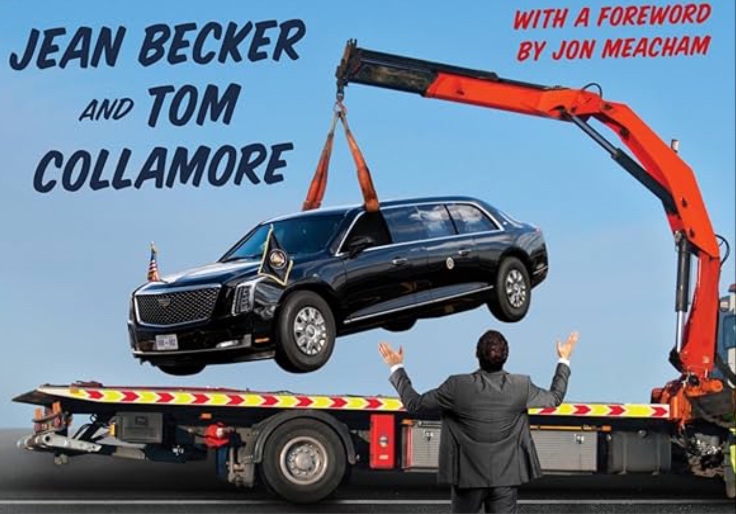
In Jean Becker and Tom Collamore's Don't Tell the President, an oral history of the world of presidential advance, the authors provide a sense of what it's like to do advance work for a president or presidential candidate. Although this type of work has in some ways become easier with the advent of smartphones that allow teams to maintain contact with White House or campaign headquarters at all times, advance men and women are typically sent out to remote locations with minimal supervision and maximal responsibility. These teams face real, hard deadlines. The president will be at a certain time or place. The advance people must make sure everything runs smoothly. If they do their job perfectly, no one will notice. But if they screw up, the failed event will be blasted all over the evening news and the next day's headlines and become the fodder for late-night comics and the candidate's electoral foes.
The most famous example of this perhaps was Gov. Michael Dukakis in the tank. In 1988, the Democratic presidential nominee went to suburban Detroit to try to show he was strong on defense by appearing in a tank. To take this ride, however, Dukakis had to don the massive tanker's helmet, and the subsequent pictures of Dukakis in the headgear made him an object of ridicule. The advance man for this event was a 23-year-old named Matt Bennett, who tried to warn about the danger of the helmet and worked to forestall the problematic photo opportunity from taking place, to no avail. The picture of the governor in the helmet appeared everywhere. A Dukakis aide said to Bennett, "Nice event, Matt. It might have cost us the election. But beside that, it was great."
Although most of the stories in the book are not quite as well known as the Dukakis one, many are at least as equally amusing. During the 1988 Bush campaign, a young Jewish lawyer from New York named Brad Blakeman had to deal with a very difficult mayor of McAllen, Texas. Blakeman describes the obstreperous man as a "Boss Hogg" type who was constantly second-guessing Blakeman and making impossible demands. Blakeman finally threatened to cancel the event, which made the mayor concede: "You can have your damn FDA inspection and all the other nonsense, but you are never welcome in Texas again!" At the event, Blakeman observed the mayor talking to Bush and gesturing unhappily in his direction.
Later, after Bush won, Blakeman encountered the mayor at an inaugural ball and told him, "Thank you for speaking to the vice president about my future. Clearly you had a real impression on him since he made me a managing director of the inaugural." He adds, "I turned around and left him with his mouth hanging open."
In another humorous tale from the '88 campaign, Tom Scully was a communications lawyer who knew about the fledgling satellite industry. As a result, he was the only person who was able to set up a satellite link letting the candidates speak to multiple stations across the country. This is elementary today, but it was cutting-edge technology back then. Scully describes overcoming immense difficulty in extremely suboptimal conditions to successfully get Bush aired via satellite on multiple stations at a crucial moment in the race.
After Bush's victory, Scully got hired by the White House, working in a substantive position under Dick Darman at the Office of Management and Budget. Then, as Scully recalls, "the first time I went to a meeting with the president in his office—yes that would be the Oval Office—along with some members of his senior staff, he looked at me and said, incredibly nicely, 'Hey, you work here? I thought you were a TV guy!'"
At times advance people are put in somewhat impossible situations. During George W. Bush's presidency, advance aide Brian Jones was told by lead advance man Robbie Aiken to hold an elevator at all costs until Interior Secretary Dirk Kempthorne had gotten on the elevator. Complicating the situation was the arrival of the president himself, who wanted the elevator to take off without waiting. Jones held the line as long as he could before finally acceding to the president's wishes, and it was a good thing he did. As Jones told the authors, "I was relieved to learn that Robbie Aiken never located Dirk Kempthorne. The search continues to this day." (Kempthorne was of course eventually found, but tragically just died this weekend.)
In addition to being entertaining, tales from the world of advance can often provide insight into a president or presidential candidate. Paul Costello worked for Rosalynn Carter in 1980 and recalls that "President Carter announced that he would not campaign until the U.S. embassy hostages were released from Iran. That meant the principal surrogates, first lady Rosalynn Carter, and vice president and Mrs. Mondale, would all be on the road campaigning." At one point, Mrs. Carter called her husband at the White House to tell him what a grueling day she had had on the campaign trail. Carter, who always had trouble reading the room, replied curtly, "I've had a tough day, too," prompting Rosalynn to hang up on him.
We get a more flattering portrait of George H.W. Bush and his wife in one story from the '88 campaign. Advance man Bruce Zanca recalled that he directed the Bush motorcade to leave a tardy Newsweek reporter named Margaret Warner behind. The well-established rule for this circumstance was that the motorcade takes off on time. Complicating this particular case, though, was the fact that Warner had a cover story in Newsweek suggesting the vice president was a "wimp."
Bush heard about what happened and confronted the aide: "Zanca, did you just maroon Margaret Warner?" Zanca's legitimate explanation failed to assuage his boss, who told him, "We are not vindictive, Bruce. That is not how we roll." Yet while Bush was unhappy with what had happened, Bush's wife had a different take: "As I was leaving the room, Mrs. Bush said to me with a wink, 'Good job Bruce; I would have left her, too.'"
Having worked in the White House myself, the tales in this book mostly ring true, although there appears to be one bit left out. For the most part, the book soft-pedals the advance world's rumored "wheels up, rings off" reputation. The one exception to this is the story of an unnamed Army major who, unwisely and despite warnings, hooked up with a very eager English-speaking Russian woman on an advance trip to the Soviet Union. The major had been up for the prestigious job of military aide to the president. Unfortunately for him, the American embassy in Moscow received photos of his assignation. The major was banished, never to be seen near the White House again.
When I asked a friend who had spent time in advance about this being the only tale of sexual shenanigans in the book, he shared with me the advance credo "What happens on the road, stays on the road." Despite this one very important exception, Don't Tell the President gives readers some insight into (most of) what actually happens on the road, and readers interested in the subject will benefit from this engaging book.
Don't Tell the President: The Best, Worst, and Mostly Untold Stories from Presidential Advance
by Jean Becker and Tom Collamore
Harper, 320 pp., $32
Tevi Troy is a senior fellow at the Ronald Reagan Institute, a senior scholar at Yeshiva University's Straus Center, and the author of five books on the presidency including, most recently, The Power and the Money: The Epic Clashes Between Commanders in Chief and Titans of Industry.
The post Prepping for the President appeared first on .