Hardcore Country Hero
 QWER
QWER
For wayward souls craving a dose of old-school, real-deal country music, there's an obscure but surefire remedy, a 1973 low-budget cult movie called Payday. It stars wild-man actor Rip Torn in a career performance as Maury Dann, a pill-popping, pistol-toting, whiskey-swigging country singer with scimitar sideburns and a bad attitude working his way down the music-biz food chain.
Shot on location in the Alabama sticks, Payday revels in the seamy side of the honky-tonk circuit of that era, even as it pays homage to the craft of a one-hit coulda-been like Dann, up all night at a nowhere motel with a guitar and a fifth of Rebel Yell, writing an ode to his ex and the "slowly fading circle on her finger where my ring used to be." Besides the music, there are backseat trysts, casual gunplay, and a parking lot stabbing: Call it hillbilly gangster cinema verité, a million miles from mainstream Hollywood C&W-inspired treacle like Tender Mercies and Honeysuckle Rose.
In one memorable scene, Dann coaxes a female fan whom he'd bedded the night before to join his entourage on the road to the next show. "We only pass this way once," he says with a wolfish grin, "might as well pass by in a Cadillac."
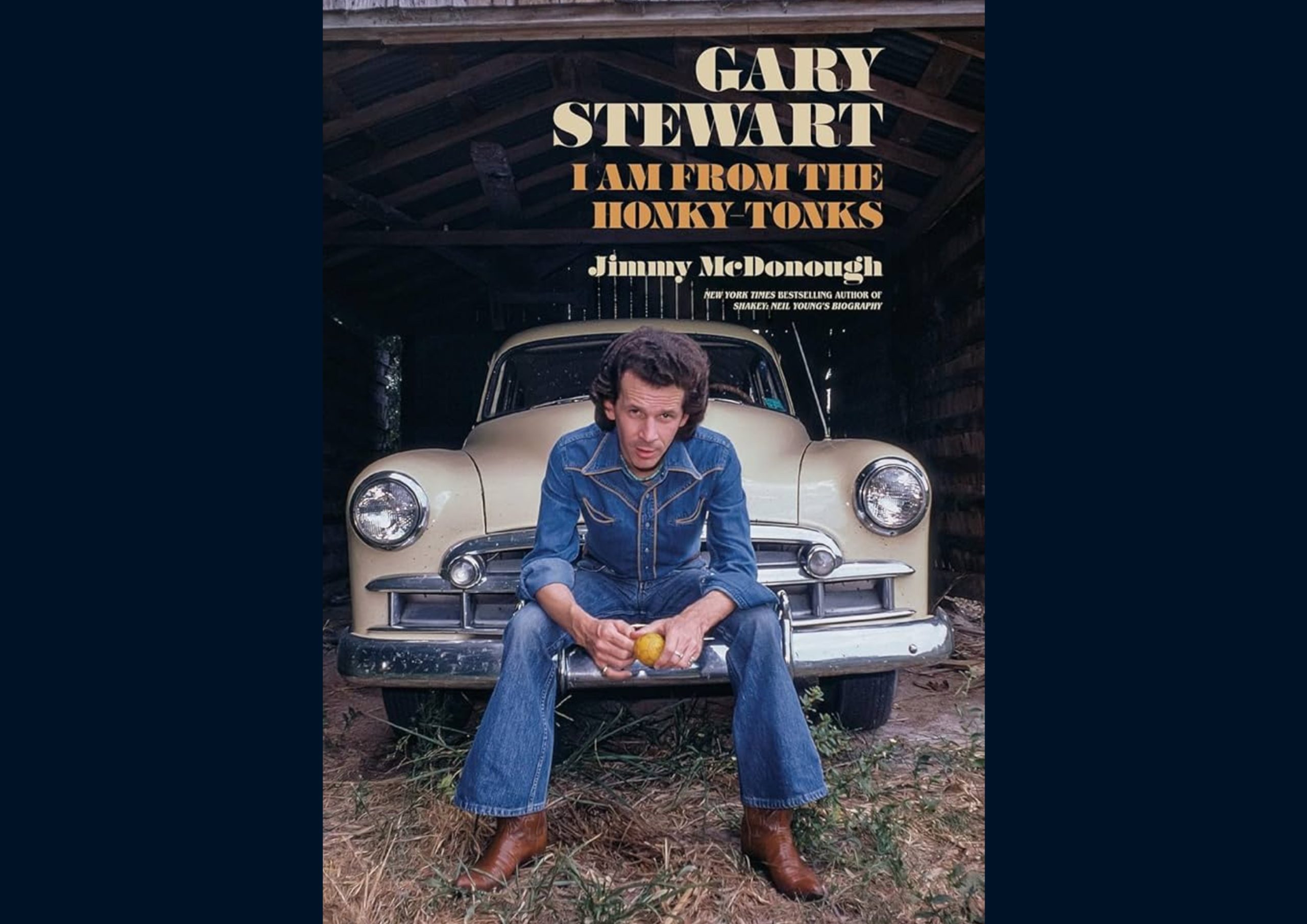
The line provides a chapter epigraph in I Am From the Honky Tonks, a riveting biography of Gary Stewart, whom many rate among the last of the authentic hardcore country singers. In a string of fiery, in-your-face hit records in the mid-to-late 1970s—"Drinkin' Thing," "Your Place Or Mine," "She's Actin' Single (I'm Drinkin’ Doubles)"—Stewart transformed country's drinking-and-cheating tropes into roadhouse hymns about edgy thrills and the wages of sin. Heady, exhilarating stuff, and catchy as all hell.
Stewart lived out his songs like a real-life Maury Dann. His unfettered and feral vibrato was a voice crying out in the wilderness, as if prophesying the Music City Babylon that has come to pass, a dire soundscape of Walmart cowboys crooning in auto-tuned, shit-eating drawls about their pick-up trucks. "Gary Stewart was a bona fide outlaw, not the kind concocted by a record company, and one that excelled in self-sabotage," writes author Jimmy McDonough. "Nashville didn't know how to package (or control) this kind of realness, and Gary's brand of hillbilly was far more downhome than, say, a Rolling Stone-friendly Gram Parsons."
One of our more adventurous music writers, McDonough has penned definitive and highly obsessive bios of Neil Young, Tammy Wynette, and Al Green. But he has also chronicled luminaries of oddball Americana, from exploitation film director Russ Meyer to vintage Vegas entertainer Georgette Dante. His affinity for underappreciated fringe-culture figures has met its match in Stewart, not only due to McDonough's fanatical love for his hero's mongrel roots music, which "at his best inspires awe," but because for decades he was a friend and confidante.
By the late '80s, Stewart's career had fizzled. McDonough found the down-and-out 43-year-old living in a double-wide trailer with blacked-out windows, marooned in his drug-infested hometown of Fort Pierce, Fla. McDonough's 1988 Village Voice profile helped spark an unlikely comeback for Stewart, who found fame of any sort just as hard to deal with the second time around. That was the seed of this sprawling 544-page tome, studded with ribald family photos (including a close-up of Gary's dentures) and arcane footnotes that record-collector nuts will savor. The book takes its place next to Hellfire, Nick Tosches's no-holds-barred biography of Jerry Lee Lewis, another tragedy-stalked Dixie-fried music visionary. Like Stewart's jittery off-kilter singing, the book may be an acquired taste, but once acquired, it's highly addictive.
After Stewart's suicide in 2003, his star faded fast. As McDonough notes, there've been no retrospective box sets or documentaries, not to mention any hint of an induction to the Country Music Hall of Fame. He says major publishers weren't interested so he took his project to an indie that let him go whole-hog. For McDonough, Stewart's musical legacy "needs to be exalted to the place in history it deserves."
The book earns its length, as it also does double-duty telling the Southern-Gothic saga of the Stewart clan, which an acquaintance likened to the Addams Family, and whose members granted full access to McDonough, who warmed up to the "lusty, lively, close-knit bunch." Gary was the oldest of nine, all with names beginning with the letter G like their parents. His father George hailed from eastern Kentucky and was injured in the coal mines and moved the family to Florida when Gary was 12. Family matriarch Georgia ruled the house Ma Barker-style, whether doling out chores or the illegal narcotics that helped pay the bills. There are stretches of transcribed oral history from family and friends that emphasize blood ties and affection even as they detail incidents of Stewart kin-driven mayhem that could be straight out of the TV show Cops.
The musically gifted and work-averse Gary was marked by the cultural whiplash between his Appalachian roots and his wild teen years in the hedonist port town of Fort Pierce. He soaked up the disparate influences, which spawned a genre-hopping performer with a full arsenal of Southern music styles at his disposal, from barrelhouse boogie woogie on down. "A singer, songwriter, guitarist, and piano player, Stewart's sound was forged in Kentucky hollers and Florida honky-tonks," McDonough writes, "and his high, thrilling tenor could tackle rock, ballads, blues, bluegrass, all of it sounding authentic."
It was the time as well as the place that made Stewart so unique, one of the first country performers to tap into the cathartic energy of early '70s Southern rock longhairs like his favorites, the Allman Brothers, with whom he often performed. But after he stormed the country charts, Stewart recoiled from the spotlight and the large-venue show dates; his idea of success was playing the sweaty, intimate tonks where he could feed off the heat on the dance floor. "I love music because it's the best drug there is—it's adrenaline," he tells McDonough. "Get him into some backwoods shithole and he'd really fly," said his soundman. "Stewart was just one of those downward mobility guys."
By the early '80s, there were drug arrests and a car accident that got him addicted to painkillers. One of his best songs, "Harlan County Highway," about his old Kentucky stomping grounds, is a clear-eyed lament addressing his epic flameout: "What started out as heaven/Got lost along the way."
By the time McDonough showed up at the trailer, he found a pill-head who'd called it quits (ironically, Stewart was never a big drinker). But they bonded over a devotion for roots music—the more obscure 45 rpm rockabilly single, the better—and soon Stewart relished his role as a redneck Samuel Johnson to McDonough's Boswell. ("Tell it the Jimmy way," he instructs him.) Their repartee is at the heart of the book, with the acolyte disparaging an overproduced '80s song of his idol and its "stink of Jimmy Buffett marimbas," while Stewart is revealed as a trailer-park aesthete, once ruminating, "I want to write like Thomas Hart Benton paints." And a prickly character as well. At one point, he throws a knife at McDonough, hissing, "Stranger, you don't know me," as he recites from a 1977 poem, "Appalachia," by West Virginia native Muriel Miller Dressler, dear to mountain people for generations.
And bad news kept knocking on Stewart's door. There was the suicide of his son Joey at age 25, years after his sister Griselda had done the same. When Stewart's muse and wife of 43 years, Mary Lou, died in 2003, he shot himself a few weeks later. According to McDonough, it was meant to be that way: "If one goes, the other will follow—this was their romance."
Fittingly, in his final years, Stewart returned to the roadhouse circuit where he'd started out, "in the dusty honky-tonks of Texas, Louisiana and Florida," writes McDonough, where "Gary remains King." He traveled in style, à la Maury Dann, in a white Caddy owned by one of his handlers, who recalled: "When we got with Gary, we enjoyed every bit of it, because we didn't have to be professional. We were runnin' up the road like a bunch of banshees, gettin' paid cash money, not havin' to answer to nobody."
Doin' things the Gary Stewart way.
Gary Stewart: I Am From the Honky Tonks
by Jimmy McDonough
Wolf + Salmon, 544 pp., $40
Eddie Dean is the coauthor of Dr. Ralph Stanley's Man of Constant Sorrow: My Life and Times.
The post Hardcore Country Hero appeared first on .