

Man Accused of Assassinating Minnesota Legislator Pleads Guilty


MINNEAPOLIS — A year ago this weekend, Minnesota awoke to a terrifying situation.
State Rep. Melissa Hortman and her husband, Mark, had been fatally shot at their suburban Minneapolis home.
A few miles away, state Sen. John A. Hoffman and his wife, Yvette, were found with gunshot wounds at their house.
And the gunman, who fired at police officers before disappearing into the night, was nowhere to be found. More than a day would pass, as residents hunkered down and officers fanned out for miles, before there was an arrest.
On Thursday, the accused gunman, Vance Boelter, pleaded guilty in federal court to murder and stalking in the attack, which authorities have said was politically motivated. Prosecutors recommended that he be sentenced to life in prison, and they agreed not to seek the death penalty.
The attack on the legislators, both Democrats, raised fears about increasing political violence in the United States. And the violence shattered the culture that had long defined politics in Minnesota, where lawmakers listed their home addresses online and made it easy for residents to contact them.
In the year since, Minnesota has changed. Politicians have scrubbed personal information from their websites. Security checkpoints have been installed at the state Capitol.
The state reeled, too, in the months that followed. An August attack at a Catholic church and school in Minneapolis left two students dead and more than 20 people wounded. The deployment of thousands of immigration agents to Minnesota this winter led to three shootings, combustive protests and a collapse in state-federal relations.
Through it all, Minnesota officials often invoked the attacks on the Hortmans and Hoffmans as an example of all the trauma that they and their constituents had endured.
Last June, as the search for Boelter was underway, law enforcement officials urgently contacted a long list of public figures, many of them Democratic politicians, whose names had been found inside an SUV that he abandoned at one of the shooting scenes. The state’s leaders told people who had planned to attend “No Kings” protests that weekend to stay home after investigators found papers in the vehicle suggesting he might have been planning to attack demonstrators.
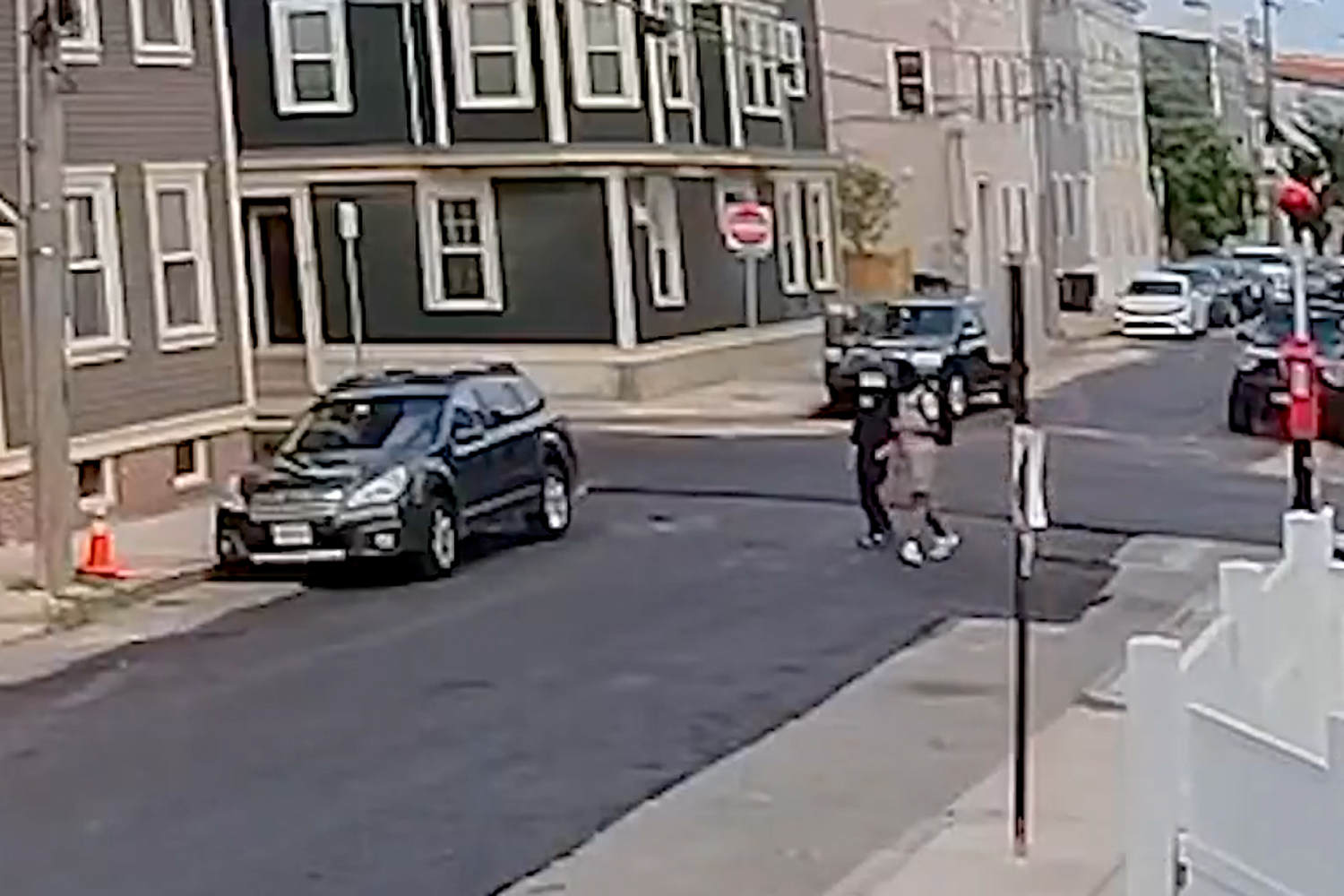
Prosecutors would later say that Boelter, who they said had disguised himself as a police officer and worn a mask, had gone near the homes of two additional Democratic legislators that night. At one house, they said, he went to the door but found that nobody was home. At another, they said, he left after a police officer noticed him and tried to talk to him.
On an upper floor of the federal courthouse in downtown Minneapolis, Boelter described how the attacks played out as he responded to a series of questions from one of his lawyers.
Yes, he said, he had planned the attack for months.
Yes, he said, he had conducted research on Hortman and Hoffman.
Yes, he said, he wore a mask and disguised himself as a police officer.
Boelter, wearing an orange sweatshirt and pants with his legs shackled, spoke in even tones and answered extensive questions from Judge John R. Tunheim, who accepted the guilty pleas and the plea agreement. Boelter, who was led in and out of court by federal agents, interacted only with his lawyers and did not appear to look at the gallery, which was filled with journalists and people connected to the victims’ families.
Daniel N. Rosen, the top federal prosecutor in Minnesota, told a judge Wednesday that his office had reached an agreement with Boelter and asked for a change of plea hearing, which was scheduled almost immediately.
After the hearing, Rosen described political violence as “a scourge plaguing America” and said he expected Boelter to spend the rest of his life in prison without parole.
“To all of those who would commit political violence: This Justice Department will seek and obtain the longest prison terms for your offense,” Rosen said in a statement.
Earlier in the week, the Justice Department said it had decided not to seek the death penalty after determining that underlying stalking charges against Boelter most likely did not make him eligible for capital punishment.
Federal prosecutors can seek the death penalty when a violent crime leads to a murder involving a firearm. There is doubt about whether stalking qualifies as a violent crime under court precedent.
“Prosecutors worked hard on this case to make sure he was held accountable to the fullest extent possible,” Emily Covington, a Justice Department spokesperson, said in a statement.
Boelter was charged in connection with the shootings in both state and federal court. Minnesota has no death penalty for state crimes, but federal prosecutors initially left open the possibility that they might pursue capital punishment.
A spokesperson for the Hennepin County attorney’s office, which is prosecuting the state charges against Boelter, said the plea agreement in federal court would not affect the state case. A state official who has previously provided statements on the behalf of the Hortmans’ adult children said after the hearing that the family did not wish to comment.
—
This article originally appeared in The New York Times.
By Mitch Smith
c. 2026 The New York Times Company
The post Man Accused of Assassinating Minnesota Legislator Pleads Guilty appeared first on GV Wire.
 Like
0
Like
0
 Dislike
0
Dislike
0
 Love
0
Love
0
 Funny
0
Funny
0
 Wow
0
Wow
0
 Sad
0
Sad
0
 Angry
0
Angry
0







Comments (0)