

Trump Winds Down the War He Started With Goals Unmet


Almost immediately after striking a deal with Iran, President Donald Trump appeared eager to take a victory lap.
He trumpeted that the agreement would open the Strait of Hormuz, a vital waterway for the world’s energy supplies whose stalled ship traffic has rattled the global economy. He told The New York Times that his efforts had saved Israel from nuclear extinction and made the Middle East safer. It all gave him a key win as he traveled to France for the Group of 7 summit, where he will meet with European leaders who have criticized his approach to the war.
Despite Trump’s grandiose claims, the agreement has not yet achieved the core goals he laid out three months ago for launching the U.S.-Israeli war against Iran.
Back then, Trump said the United States intended to “annihilate” Iran’s military capabilities, abolish its nuclear ambitions, topple its theocratic leadership and liberate its people, whom he encouraged to take over their government when the fighting had stopped. Just one week after the strikes started, he said Iran’s only path to a deal was an “unconditional surrender.”
Trump publicly declared victory Sunday mainly based on solving a problem of his own making, in miscalculating Iran’s ability to choke off the Strait of Hormuz. Trump asserted on Truth Social that he had authorized the toll-free opening of the crucial waterway, which would essentially restore the prewar status quo, and celebrated that the global energy markets would rebound.
“Ships of the World, start your engines,” he wrote. “Let the oil flow!”
The latest framework, which has not yet been publicly released and is expected to be signed in Geneva on Friday, is a capstone to three months in which Trump has delivered a dizzying array of mixed messages.
He said that Iran’s nuclear program had been “obliterated” in U.S. strikes last year, yet said that the war was necessary to stop the Iranians from obtaining a nuclear weapon.
Trump said that Iran’s nuclear program posed a threat not only to allies, but also to U.S. troops overseas and to everyday Americans. He was clear that the war’s conclusion would rest on one stipulation: “It has always been the policy of the United States, in particular, my administration, that this terrorist regime can never have a nuclear weapon,” he said. “I’ll say it again. They can never have a nuclear weapon.”
Even Saturday, when he announced that a deal would be signed the next day, he claimed that Iran’s leaders “no longer want a nuclear weapon, nor will they have one, either through purchase, development or any other form of procurement.”
But the deal leaves that issue unresolved for at least another 60 days, when both sides are expected to negotiate on nuclear issues.
Trump did not cast the deal as a solution to the nuclear threat. Instead he focused on the Middle East and his legacy.
“This Great Deal will bring Peace and Security to the whole Region,” he wrote in a social media post. “Many presidents have tried to make Peace with Iran, and all have failed before me.”
Trump has also sent conflicting messages over how far he would go to secure a nuclear agreement with Iran. He has gone from threatening to wipe out the country’s civilization to saying he was in no hurry to remove its remaining stockpiles of enriched uranium.
At the start of the war, Trump initially claimed the United States would accomplish its goals in “four to five weeks.” He repeatedly compared the war in Iran to his quick military operation in Venezuela, in which the top leader was removed but much of the rest of the government remained in place, willing to work with the United States.
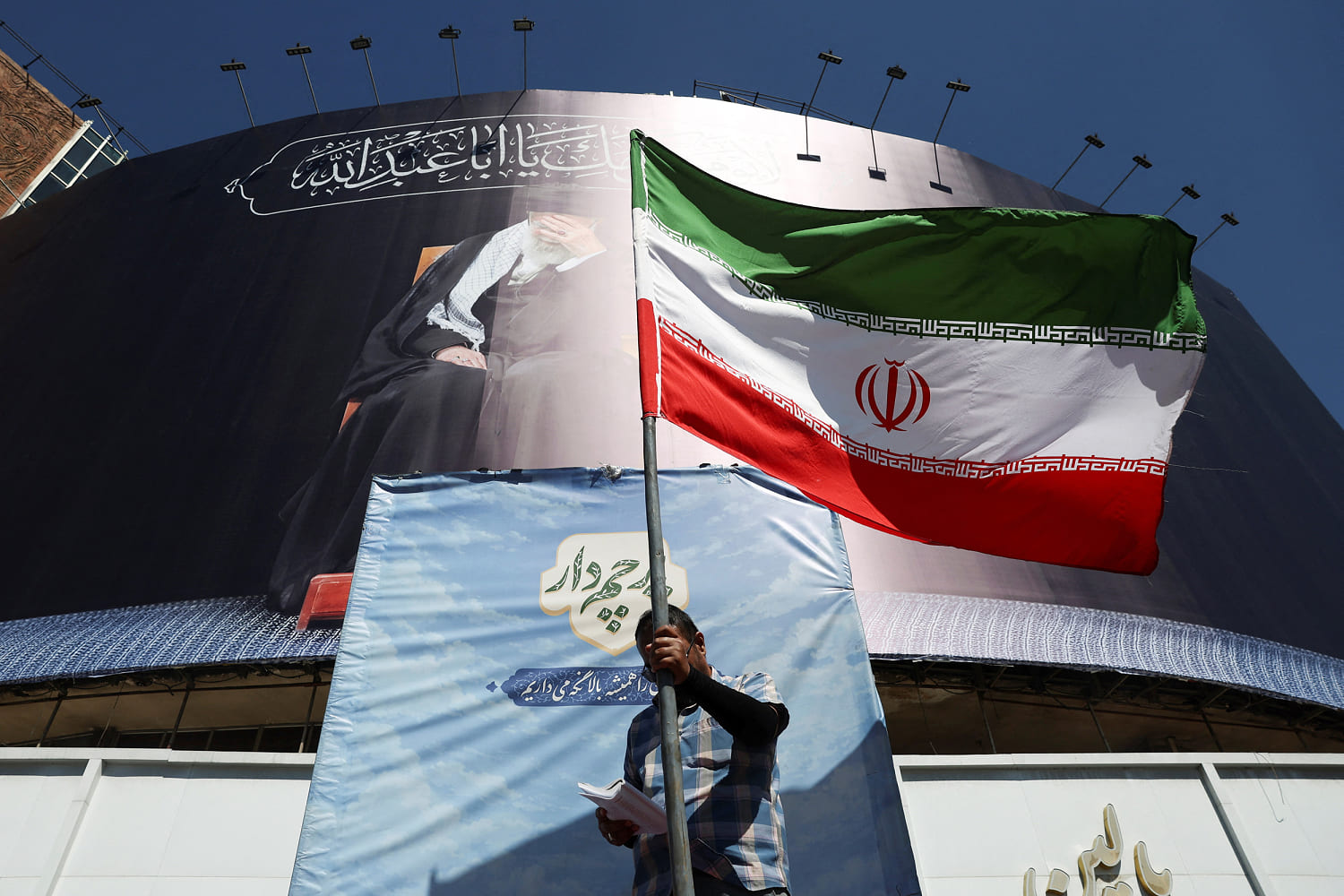
This war instead dragged on for months, killing thousands of Iranian civilians and 13 U.S. service members. Rather than bowing to the United States, Iran’s new leadership has been emboldened, consistently withstanding military and diplomatic pressure to persist in its goal of advancing a nuclear program.
In negotiations with Trump’s son-in-law, Jared Kushner, and special envoy, Steve Witkoff, the Iranians have held firm on not giving up the right to enrich uranium.
“As for the nuclear issues, there really is no agreement,” Daniel B. Shapiro, a former U.S. ambassador to Israel, said in a statement on social platform X. “Iran knows how to drag out those negotiations, and try to pocket concessions along the way.”
He added that the United States now appeared to be paying to reopen the Strait of Hormuz by potentially lifting sanctions imposed against Iran. The Trump administration has said Iran would receive no relief from sanctions or release of its frozen financial assets until it delivered on its commitments.
Plenty of spoilers could arise along the way. Notably Israel, a partner in the war but not in the framework for peace, has been less than enthusiastic about the deal. Trump himself said in the Times interview that he was prepared to restart military attacks against Tehran if Iran failed to reach a final nuclear accord with the United States.
Some of Trump’s allies appeared concerned over the unfinished aspects of the negotiations. Sen. Lindsey Graham, R-S.C., who has long supported military action against Iran, said he was “somewhat concerned that Iran’s view of the agreement seems different than what the American negotiating team is claiming.”
“I will be watching closely the ensuing negotiations regarding Iran’s nuclear program and other matters,” Graham said. He added that Vice President JD Vance, whom he described as the “architect of the deal,” should ensure that the final deal is presented to Congress.
In an interview with CNBC on Monday, Vance said the framework gave the administration “leverage,” though there remained “details to figure out,” including on enriched uranium.
As negotiations progressed over the weekend, Trump posted a lengthy criticism on social media of the previous deal struck with Iran by President Barack Obama, asserting that the one he was working on would be better.
Shapiro, who is also a fellow at The Atlantic Council research institute, said on social media that Trump seemed focused on comparing his deal favorably with the Obama deal, but the United States was far from being able to come to such a conclusion.
“It is possible that no deal will ever be reached,” Shapiro said, “and very likely that if one is reached, it will be worse than what we could have achieved through diplomacy before the war.”
—
This article originally appeared in The New York Times.
By Erica L. Green and Zolan Kanno-Youngs/Eric Lee
c. 2026 The New York Times Company
The post Trump Winds Down the War He Started With Goals Unmet appeared first on GV Wire.
 Like
0
Like
0
 Dislike
0
Dislike
0
 Love
0
Love
0
 Funny
0
Funny
0
 Wow
0
Wow
0
 Sad
0
Sad
0
 Angry
0
Angry
0





Comments (0)