The Empathy Justice
 QWER
QWER
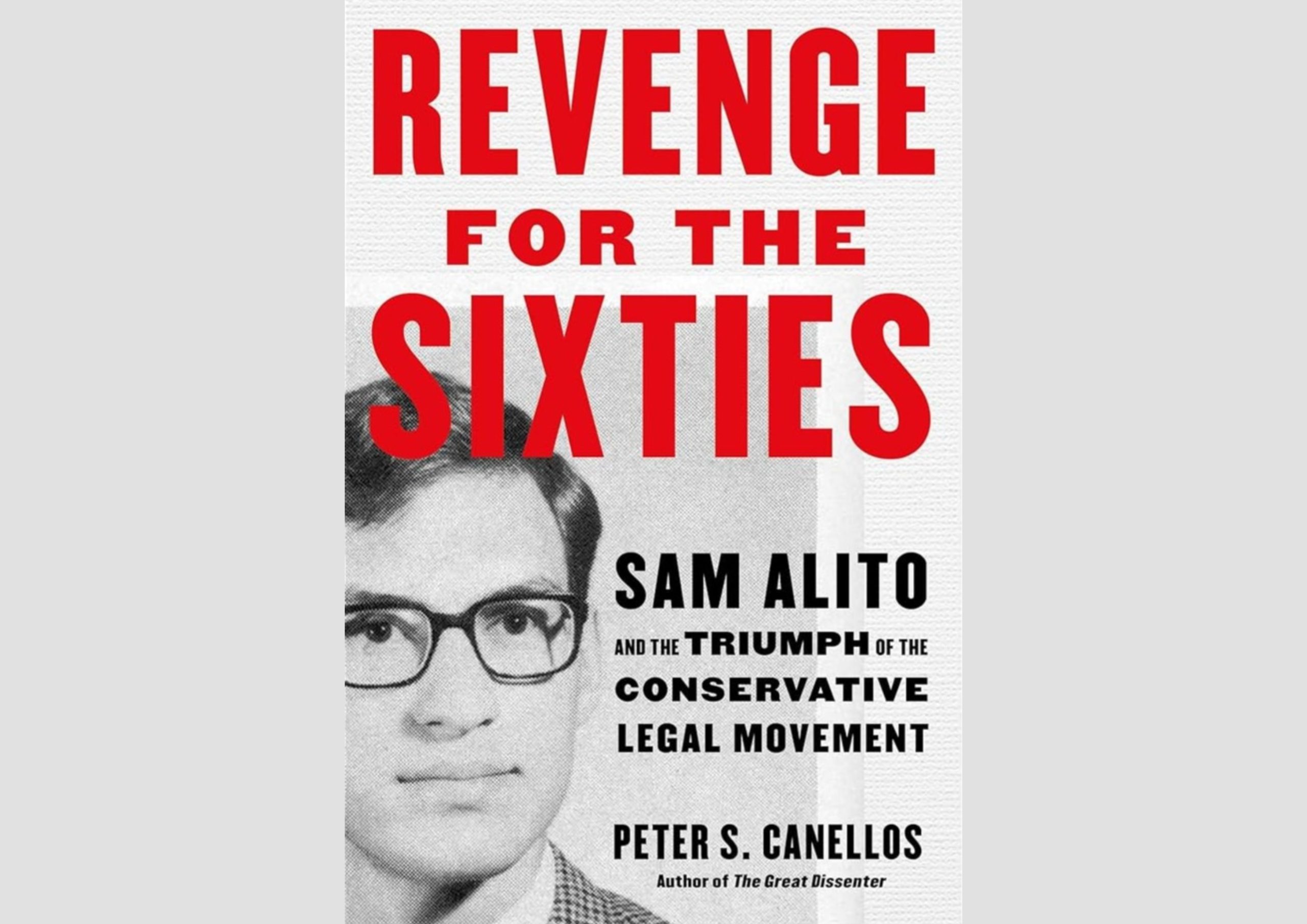
When asked what he was looking for in a Supreme Court justice, then-president Barack Obama famously observed, "I view that quality of empathy, of understanding and identifying with people's hopes and struggles as an essential ingredient for arriving as just decisions and outcomes." He said it, of course, in the context of then-judge Sonia Sotomayor, but reading Peter Canellos's recent biography of Justice Samuel Alito (Revenge for the Sixties: Sam Alito and the Triumph of the Conservative Legal Movement), one can't help but wonder if it's Obama's "empathy standard" that makes Supreme Court justice Samuel Alito so great.
The problem with the empathy standard was always "empathy for whom?" Is it for the young man put upon by the police, or is it for the victim of violent crime? Is it for the lesbian music teacher in the Catholic school, or is it for the devout principal? Is it for the woman who wants an abortion, or is it for the unborn child who will die? It can't even provide an outcomes-based rule of decision without smuggling ideological priors. Of course, that's why Obama meant empathy for litigants favored by the left, which Sotomayor has in spades.
Canellos obviously doesn't set out to paint Alito in the glowing terms Obama reserved for Sotomayor. In his telling, Alito’s jurisprudence is best understood as one of bitterness. Alito is bitter over his treatment at Princeton, over his constitutional law professor at Yale, over the riots of his youth, and even over the mistreatment of Italian Americans. But that's a deliberately negative way to see it. In reality it's not bitterness, but rather protection of and empathy for the best of American life.
How Canellos tells the Alito origin story—axe-grinding aside—is interesting. He goes through the history of the Italian-American community near Trenton, New Jersey, with some care, tracing the Alito family roots from the Italian ghetto of Chambersburg with its tenements and heavy manufacturing, to the all-American suburb of Hamilton with its single-family houses and upward mobility. Alito's time at Steinert High School is given due psychological weight for the later justice, in particular his time on the debate team and school newspaper. (The former is still a thing: My favorite teacher in high school came over from Steinert and always bemoaned how my friends and I were not interested formal speech and debate.)
Alito's long-1950s idyll of Hamilton, however, soon gave way to the most chaotic stretch of time in the history of Princeton University, which he attended. Canellos recounts Alito's comments during his confirmation hearing that what he saw at Princeton was "very smart people and very privileged people behaving irresponsibly." To understand what he meant, we're presented with a relatively quiet, extremely studious outsider in the Ivy League who just wanted to be left alone to get ahead being consistently confronted by the mobs of hippies and terrorists (yes, terrorists—they bombed the ROTC) around him.
And women. Alito's was the last all-male class at Princeton, so the disruption of coeducation makes an odd appearance. The reasons soon become obvious. First, opposition to coeducation by the group Concerned Alumni of Princeton (in which Alito may have participated) featured in his confirmation hearing. Second, Alito's female classmates need to be heard at the end of the book when it comes time to discuss his dismantling of Roe v. Wade. Obviously.
Again, Canellos has an agenda, to be sure, but it's often interesting stuff. The same goes for Alito's time at Yale and as a young lawyer—although the ominous intoning about his relationship to "the Trump family" through Donald's older sister, Maryanne, being his boss is laughable. His time as U.S. attorney in New Jersey is given somewhat short shrift. It's not like there aren't interesting stories to tell. (He was the guy who went after "Crazy Eddie!")
Once Alito dons the robe, though, things go a little off the rails. This should be the meat of the book—after all, it's "the Triumph of the Conservative Legal Movement"—but Canellos doesn't seem to understand the conservative legal movement very well at all. It's written from the perspective of a well-read liberal layman. He recounts the judicial wars following Robert Bork but neither breaks any new ground nor bothers to harvest the best existing fields. (If you want the judicial wars as recounted by their field general, you should consult The Long Game and The Price of Power by and about Mitch McConnell. It seems Canellos didn't.) It's just liberal conventional wisdom on how the buttoned-up conservative minority took over the legal profession. ProPublica is a reliable source. Senate Democrats have valid concerns. Leonard Leo is up to no good. Uh huh.
Canellos also isn't a lawyer, and it shows. He pays particular attention to Alito's religious-liberty jurisprudence and whiffs. Take his "gotcha" on Hobby Lobby, where he says Alito "had to overcome numerous hurdles, including whether a for-profit corporation could be considered a 'person,'" and how his conclusion contrasts with his view in the Lilly Ledbetter pay-discrimination case where he had "been a stickler for the precise wording of a law." In reality there's no contradiction at all; it was the Hobby Lobby dissenters who were importing foreign concepts into the "precise" definition of "person" while Alito provided a straightforward application of the Dictionary Act.
Or take his critique of McDonald v. City of Chicago, applying the Second Amendment's individual right to bear arms against the states: "The Fourteenth Amendment says nothing about bearing arms" but Alito had a "willingness to incorporate unwritten traditions into the law through the Fourteenth Amendment." The Fourteenth Amendment doesn't say anything about a free press, either, but nobody seems to complain about that applying to the states. It turns out there's a well-developed legal doctrine of incorporation that controls when enumerated rights can be enforced against the states, and that's what Alito applied.
This issue goes to a bigger problem with the story Canellos tries to tell, which only hints at the interesting story beneath. During his recounting of Alito's youth in Hamilton and his development as a lawyer, Canellos intersperses the legal developments of the liberal-activist Warren Court. His gloss on the Warren Court is standard-fare liberal, though. Its critics get their summarized say on why it was bad, but who knows whether the Warren Court was popular or activist? (It wasn't; it was.)
It was the Warren Court and the rampant crime it facilitated that accelerated the flight of the Italians from Trenton to Hamilton. As Canellos does note, it was the Warren Court that prevented Alito's mother from using Bible verses in class as a teacher and that kept his father up at night figuring out the boundaries of new legislative districts. It was the Warren Court that authorized the lawless protests of the 1960s. There is a direct connection between the chaos of the '60s that shook Alito and the core problem the conservative legal movement was designed to address.
That's where the stories of Alito's early life are interesting. It doesn't show what he’s bitter about but rather what he wants to protect: God-fearing, productive Americans who want to live their lives, raise their families, go to church, and get ahead in life. Alito has empathy for Nixon's "silent majority."
Canellos presents it as a rather silly thing that one year at Princeton exams were postponed until the fall due to campus unrest. Alito had studied hard and was, therefore, outraged. He was right! Alito was at Princeton to get an education, like the actual majority of his classmates who were not, in fact, attending antiwar rallies in the chapel.
Who was looking out for those students—who were not the legacies and elites who could afford to play-act Che Guevara? Where was empathy for them? We all know the name Ernesto Miranda from the famous police warnings, but who knows the name of the young woman he kidnapped and raped? Where was the empathy for her?
Canellos quotes "Benedict Arnold" clerks who bemoan just how conservative Alito has been on the Court. One anonymous Third Circuit clerk says, "I'm shocked at who he is today." He is the anchor of the Court's now-dominant conservative wing. He never lets theoretical niceties pull him leftward in the way that even great conservative justices seem to enjoy. He only provided the deciding vote to the liberals once (Gundy v. United States) and it was clearly because he wasn't about to question a sex predator's conviction to prove some abstract point regarding administrative law.
That's why Alito will never get a fair shake from establishment journalists. It's why he’ll never get a building at Princeton like Sotomayor Hall (whose dedication Canellos recounts). Even Justice Scalia's biting dissents earned grudging respect from the academic and journalistic elite. It was because they were dissents. Like Mitch McConnell, Alito will never get that respect because he had the audacity to win. Revenge for the Sixties is worthwhile insofar as it inadvertently shows that this urge to win is born of an empathy for the forgotten man.
Revenge for the Sixties: Sam Alito and the Triumph of the Conservative Legal Movement
by Peter S. Canellos
Simon & Schuster, 384 pp., $31
Mike Fragoso is an attorney in Washington, D.C., and a fellow at the Ethics and Public Policy Center.
The post The Empathy Justice appeared first on .