Saudi Arabia and UAE Carried Out Secret Attacks in Iran, US Officials Say
 QWER
QWER
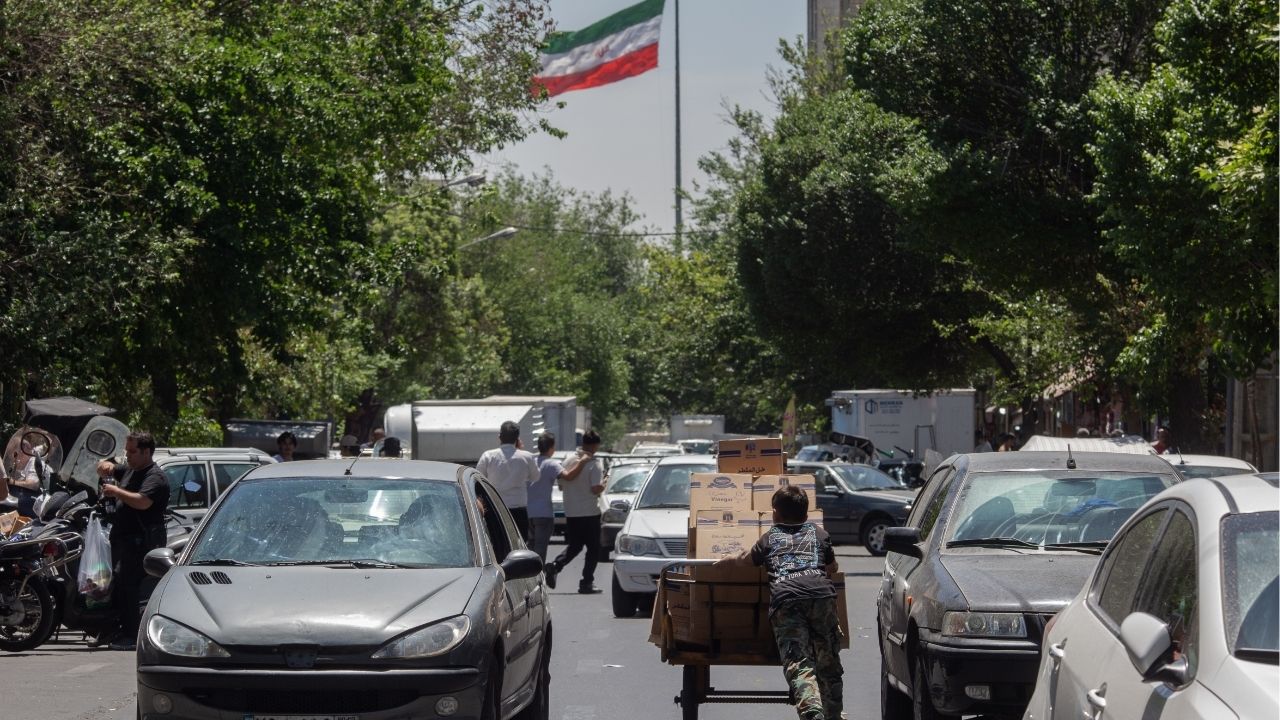
Saudi Arabia and the United Arab Emirates separately carried out strikes on Iran in retaliation for attacks conducted against them during the war in the Middle East, two current and one former senior U.S. officials said.
It is the first known time that the two countries have directly attacked Iran. The strikes, which were unannounced, underscored how both monarchies were becoming more assertive in defending their territory against the Islamic Republic, the officials said.
All three spoke on condition of anonymity to discuss operational matters. They declined describing the targets that were struck by the Gulf Arab nations or the exact dates of the attacks.

Neither the Saudi nor the Emirati government has acknowledged carrying out the attacks. Both countries host U.S. military installations but have maintained publicly that they are bystanders to the war, engaged only in defensive actions. The strikes would instead appear to make them direct combatants.
The Saudi government’s Center for International Communication, which handles media inquiries, did not respond to a request for comment, nor did the Emirati Foreign Ministry.
The Saudi strikes were reported earlier by Reuters. The Emirati strikes were reported earlier by The Wall Street Journal.
Saudi Arabia and the UAE both have deep military relationships with the United States and have traditionally relied on the United States to defend them against Iran.
Since the United States and Israel attacked Iran on Feb. 28 — against the advice of officials in several Gulf countries — that assumption has partially unraveled. Iran has launched thousands of retaliatory missile and drone attacks at Gulf Arab nations that host U.S. military installations, causing widespread damage to energy infrastructure, airports, seaports and hotels. The attacks have killed at least 19 civilians across the Gulf countries and shaken their economic models as safe havens for business and tourism in a turbulent region.
Those attacks prompted Saudi Arabia and the UAE to take direct retaliatory action of their own, the officials said.
It is not clear whether either government coordinated its response with the United States. It is also unclear what the countries’ willingness to launch direct attacks says about their trust in their U.S. partners to deter Iran.
That premise had already been seriously tested over the past decade. Before the war, both governments had been drawing closer to Iran for several years, viewing diplomatic engagement as a more pragmatic way to manage tensions with the Islamic Republic. The conflict has shattered that fragile detente, and Gulf officials have said it could take decades to repair relations with Iran.
It is possible that the decision to launch direct military action by the Saudi and Emirati governments was also — at least partly — a way to curry favor with the Trump administration.
The attacks appeared to confirm earlier remarks from President Donald Trump, who told reporters in March that Crown Prince Mohammed bin Salman of Saudi Arabia was “fighting with us.”
Later that month, speaking as a guest of Saudi Arabia’s sovereign wealth fund at a conference in Miami, Trump claimed that nearly all of the Gulf States were fighting with the United States.
“Saudi Arabia fought, Qatar fought, UAE fought, Bahrain fought, and Kuwait fought,” he said.
None of those countries have publicly said that they carried out direct attacks on Iran or whether they allowed the United States to launch attacks from their territory.
Officials fear that doing so would attract even more Iranian attacks, analysts say. Joining the U.S.- and Israeli-led war effort against Iran could also be controversial domestically, particularly in a region where public opinion of Israel tends to be extremely negative.
Still, Saudi and Emirati officials had warned that they reserved the right to take military action against Iran.
In March, hours after eight ballistic missiles exploded over Saudi Arabia’s capital, the kingdom’s foreign minister said that his government had limited patience with Iran and would “take military actions if deemed necessary.”
“We will not shy away from protecting our country and our economic resources,” said the minister, Prince Faisal bin Farhan.
It is unclear exactly what pushed the two countries to reconsider their relatively passive postures in the war.
Despite facing a barrage of Iranian attacks, Saudi Arabia has maintained diplomatic ties with Iran and kept open channels of communication with Iranian officials. It has also been openly supportive of Pakistan’s efforts to mediate between the United States and Iran in order to end the war.
The UAE, which has faced far more frequent and damaging Iranian attacks than Saudi Arabia, has generally taken a more hawkish tone toward Iran and doubled down on its ties to the United States and Israel. During the war, Israel quietly sent some Iron Dome missile defense equipment to the country to help repel Iranian attacks, according to two people familiar with the move who spoke on condition of anonymity to discuss sensitive information.
On Thursday, the Iranian foreign minister, Abbas Araghchi, singled out the UAE for being “directly involved in the aggressive action against my country.”
“They participated in these attacks and may even have acted directly against us,” he said, according to Iran’s semiofficial news agency Fars.
—
This article originally appeared in The New York Times.
By Eric Schmitt and Vivian Nereim/Arash Khamooshi
c. 2026 The new York Times Company
The post Saudi Arabia and UAE Carried Out Secret Attacks in Iran, US Officials Say appeared first on GV Wire.