Oil companies look beyond Middle East for new supply sources
 QWER
QWER

America's war with Iran is reshaping how the world hunts for oil, pushing major energy companies to invest billions in new sources far from the Persian Gulf.
Traffic in the Strait of Hormuz has been at a near standstill since the war began, eliminating a route through which a fifth of the global oil supply normally passes.
Patrick de Haan, head of petroleum analysis at GasBuddy, put the impact in stark terms.
"The Strait of Hormuz blockage is 20 million of barrels of oil per day," de Haan said.
RELATED STORY | US gas prices jump to the highest average in nearly 4 years
In response, major oil companies are investing billions in tapping oil far from the Persian Gulf. ExxonMobil recently announced plans to invest $24 billion into Nigerian oil fields. BP agreed to acquire a stake in three offshore exploration blocks in Namibia. Chevron has grown its presence in Venezuela.
Mark Nelson, vice chairman of Chevron, described the company's commitment to that region.
"Chevron has been a part of Venezuela's past," Nelson said. "We very much look forward, as a proud American company, to help it build a better future."
Those companies, among others, are looking to move away from overdependence on the Middle East for oil. Rinaldo Brutoco, founder and CEO of the World Business Academy, said instability in the region is a key driver.
"The Gulf is never going to be a stable situation again," Brutoco said.
"I think this is not like an investor saying, I'd like to put my eggs in another basket. This is like an investor saying, 'oops,' time to exit," Brutoco said.
According to energy consulting firm Wood Mackenzie, today's current oil sources will fall 300 billion barrels short of meeting demand through 2050. Companies are now looking far beyond the Middle East to fill that gap.
RELATED STORY | US imposes sanctions on a China-based oil refinery and 40 shippers over Iranian oil
Dennis Kissler, managing director of energy trading at BOK Financial, identified the most promising regions.
"The Gulf of America, Venezuela, and also Brazil. And those are three rich areas that have a tremendous amount of resources that are available to be tapped," Kissler said.
Also helping drive the exploration is an influx of money, with the price of oil skyrocketing over the past two months. Brutoco said the cash flow is fueling the push.
"They do it when they got cash and they have such a, it's a gully washer of cash, right? I mean, they have so much cash coming in because of the price of oil," Brutoco said.
Even as new sources are tapped, the Middle East will continue to play a key role in the global supply. Kissler said the region's role will shrink, but not disappear.
"Do we have to rely on the Middle East anymore for oil? We will, to a fact, but that factor is going to become a lot less. ... Especially with the partnership with Venezuela that we're trying to build," Kissler said.
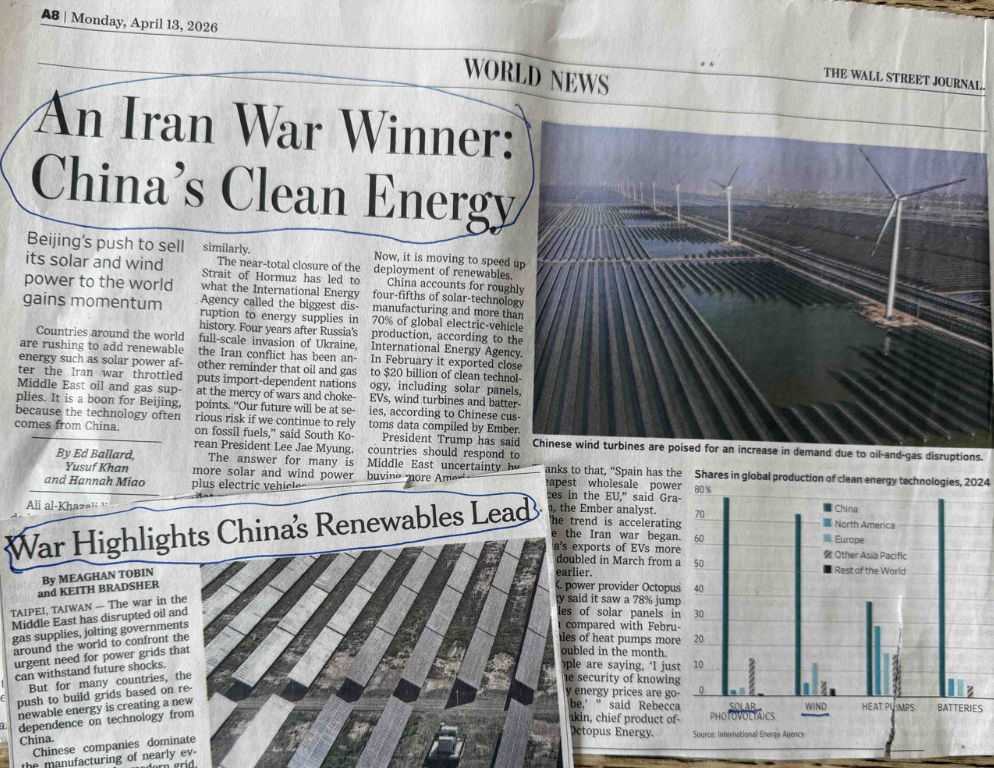
The push to pivot to renewables is another element in the global energy equation. At the start of the war with Iran, the UN secretary general urged countries to consider investment, noting "there are no price spikes for sunlight and no embargoes on the wind."
Major oil-producing countries like Saudi Arabia have already committed to boosting renewable energy production alongside investments in fossil fuel.