Meta Is Dying and It’s About Time
 QWER
QWER
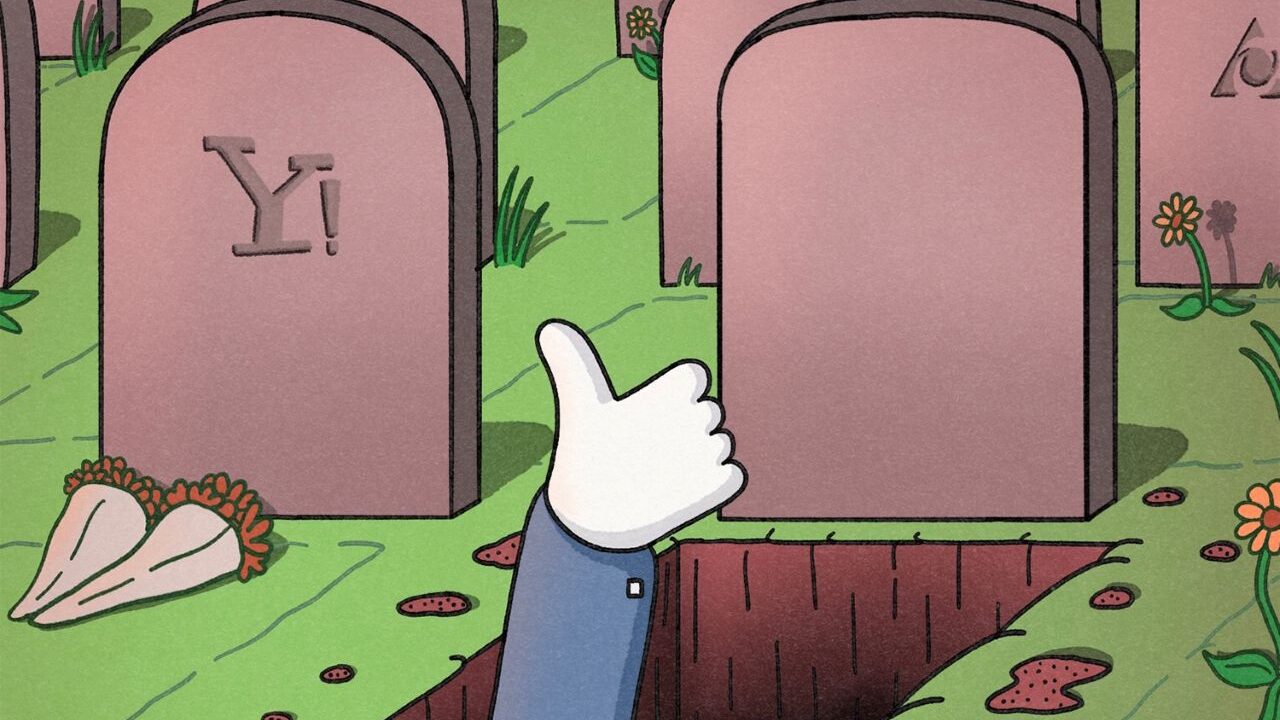
There is a moment when internet companies get the stink of death on them. For AOL, it was 2003, when it became clear that its users were abandoning its clunky dial-up internet service for far-faster broadband. For Yahoo, it was 2015, when their last-ditch acquisition spree failed, and they sold themselves to Verizon.
For Meta, that time is now. I believe the company — one of the most powerful media organizations in the world and one of the most valuable members of the S&P 500 — is at the start of a long, slow decline that will trigger aftershocks to our economy and our society.
It may be named Meta, but the company’s biggest asset is still Facebook. Started from a Harvard dorm, the original online social network has dominated our world for two decades. Its three billion users are still bigger than any single country. Its platforms can help sway an election, fuel an insurrection or spark a genocide.

But if you look carefully, you can see chinks in the armor. Meta’s earnings are starting to show the strain from years of growing consumer disaffection and reckless spending. The latest earnings, released on April 29, revealed a dip in user numbers for the first time since it started reporting these figures. And the slumping stock confirms what we have all known in our guts for a while: This is a company entering its zombie era.
Death Is Different on the Internet
Death is different on the internet. Lifeless companies like AOL and Yahoo are still technically with us. You can visit their websites. They have customers. They may even be profitable, as they cut staff and monetize their last remnants of traffic. But they are, as the kids say, peak cringe. Many teens wouldn’t be caught dead with an AOL account, a Yahoo email address — or a Facebook profile.
As a company’s brand ages, its founders leave. The excitement evaporates. The stock shrivels to a fraction of its former glory as the user base withers to those captured by an old email account or friend group. New owners often arrive — usually bean counters who are focused on cutting costs and maximizing profits. That’s when websites stoop to junk mode, spamming you with endless email “final sales” and loading up the pages with ads so gross and disturbing that they should be age-restricted.
Of course, Meta is a long way from hitting rock bottom. The online giant — which benefits from its ownership of WhatsApp, the world’s largest messaging app, and Instagram, the popular photo-sharing social network — made $200 billion in ad revenue last year. That was an astonishing 20 percent of the global ad market. Meta’s founder, Mark Zuckerberg, is still firmly at the helm thanks to an unusual ownership structure that prevents him from being fired.
Zuckerberg’s Failed Initiatives
Thanks to that, we will all get to watch Mr. Zuckerberg drive the company into the ground. From 2021 to 2026, he poured $80 billion into the Metaverse in the firm belief that we would all want to don headsets and hang out in a virtual world populated by legless avatars. Even after shutting that project down, the company still loses billions a quarter on projects like selling $500 “smart” glasses that are not only unpopular but also give major creep-filming-you-without-consent vibes.
While its adventures in avatars were going nowhere, Meta’s revenues still soared as even more ad dollars moved online in the pandemic. Then in 2022, the revolutionary chatbot ChatGPT burst on the scene, and Mr. Zuckerberg jumped into the A.I. race with an open checkbook. Pontificating about the democratization of A.I., he sank about $100 billion into building an A.I. model that anyone could run on their own machine. But last year, when that model turned out to be too slow, too inaccurate and too unwieldy for most people to operate on their own, Mr. Zuckerberg abandoned the effort and plunked down another $14 billion for a new team to play catch-up with the other leading A.I. models. Now Meta has said it will spend another $115 billion (minimum) over the next year into its new effort, which thus far performs worse than the competition.
Where is this money coming from? Increasingly, Meta has been using debt to fuel its spending, amassing $59 billion in long-term debt on its balance sheet by the end of 2025, double the prior year’s total. And that doesn’t count the “aggressive” accounting it has used to keep the cost of a $27 billion Louisiana data center off its books. “The spending growth looks increasingly unsustainable,” The Wall Street Journal’s “Heard on the Street” columnist Asa Fitch wrote this week.
Now, as the company careens from one staggeringly expensive misadventure to another, its cash-cow core business is starting to wear out. Last quarter, the number of daily active users across its properties declined for the first time to 3.56 billion from 3.58 billion.
Meta Crams More Ads Onto Its Platforms
When an aging business starts to take on water, the quickest, easiest — and most destructive — solution is to make moves that will generate more money now, but may cost the company later. And that’s exactly what Meta has started to do. In the first three months of this year, the company started cramming more ads onto its platforms while charging advertisers more. Those choices may have allowed the company to increase its revenue-per-user by a significant 27 percent in the first quarter of 2026, but they are also likely to further alienate users (and annoy advertisers).
At the same time, judges and juries are starting to penalize Meta for the societal harms of its products. In March, the company (alongside YouTube) lost a bellwether lawsuit alleging that its addictive design choices triggered anxiety, depression and body-image issues in a teen. Waiting in the wings are over 100,000 similar cases seeking claims in the tens of billions of dollars.
There is a grim satisfaction in watching this organization hoist with its own petard. This is the company that profited from trafficking in lies, that tuned its algorithms to boost hatred and division, that stole our data and used it against us, that created the culture of toxic memes that are now central to our degraded public discourse. The fall of Facebook could even be a sign of a heartening turn in our national conversation: TikTok traffics more in inspirational content — prom videos are currently trending — than in the divisive narratives Facebook fostered.
But in the continued absence of any meaningful regulation, history shows us that internet companies can still wreak a lot of damage when they are in decline.
As it was being outpaced by Google on nearly every front, Yahoo failed to invest in cybersecurity and fell victim to what is still the largest data breach of all time. In 2014, Russian hackers gained access to 500 million Yahoo accounts, targeting Russian dissidents and journalists while stealing gift card and credit card numbers.
Riddled With Fraud and Scrams
Meta’s properties, which are already riddled with fraud and scams, are likely to get even worse, given that the company has been slashing its work force in key areas focused on A.I. safety and identifying dangerous and illegal content. That means its apps are likely to grow even more polluted with everything from A.I. deep fakes to child sexual abuse material.
And Meta is still Meta. Even after losing that bellwether case on its efforts to addict users to its platforms, Meta’s chief financial officer, Susan Li, recently bragged to Wall Street that the company is using A.I. to increase the amount of time users spend watching videos and interacting with content. Fortunately, given the company’s recent track record, there’s a good chance that at least some of these terrible ideas are likely to end up in the same graveyard where Meta’s other expensive flops are buried.
Meta may be dying, but rest assured it won’t go gently into that good night. Maybe that could be a good thing. The more users quit, and the more corroded Meta’s apps grow, the faster we can all log off and close this chapter of the social-media revolution forever.
This article originally appeared in The New York Times.
By Julia Angwin/Alex Gamsu Jenkis
c.2026 The New York Times Company
The post Meta Is Dying and It’s About Time appeared first on GV Wire.