Guilty Reading Pleasure
 QWER
QWER
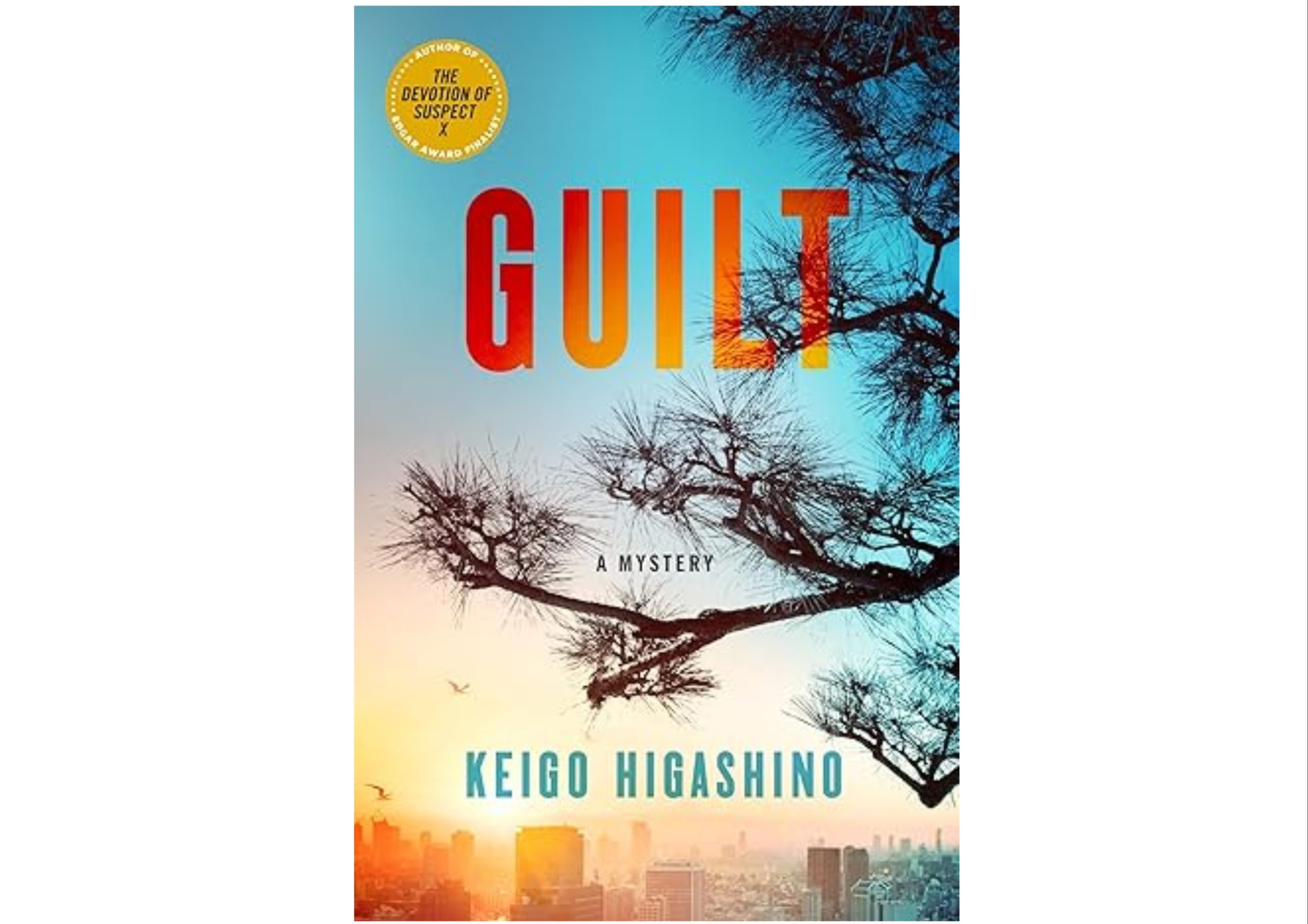
If you are a bookish person, odds are that your running gift-list for family members, friends, colleagues, and so on includes other heavy readers. Among them may well be some who enjoy mysteries, "crime fiction," and the like. If that is indeed the case, I have a suggestion for you: Keigo Higashino’s novel Guilt, just published by Minotaur Press. You might want to get a copy for yourself as well.
Guilt was first published in Japanese in 2021; its title, Hakucho to komori (Swan and Bat), was in a very different register from the generic title given to the English translation. I don’t think the experienced translator, Giles Murray, can be blamed for this; it must have been the publisher’s decision, based perhaps on fear that some readers might be wrong-footed by the more elusive but also more evocative original title.
The novel begins like a classic police procedural. Tsutomu Godai, identified atop the "Cast of Characters" as a detective in the Homicide Bureau of the Tokyo Metropolitan Police, is chatting with a detective sergeant identified only by his surname, Nakamachi. They are about to interview a man who knew Kensuke Shiraishi, a lawyer who (we soon learn) has been murdered; his body was in the back seat of his car when a couple of traffic cops, responding to a phone call from a pierside security guard, came to check out the illegally parked vehicle.
This initial impression of Guilt—the impression of the kind of story we have embarked on—is deliberately misleading. While the police investigation headed by Godai appears to be making rapid progress, the narrative soon takes an unexpected turn. Tatsura Kuraki, a suspect whom the police have been grilling, has resolutely denied any involvement in the lawyer’s murder—but suddenly he does an about-face, not only confessing to the murder of the lawyer Shiraishi but also confessing to another murder that took place 30 years earlier!
Wait a minute, you may protest, you’re giving away too much. You’ll spoil our enjoyment of the book. Not so. Kuraki’s confession comes early (just past page 60 in a novel of more than 400 pages), and many readers will question its authenticity even before it becomes explicitly clear that in fact he didn’t commit either one of the murders. Why then does he "confess"? Could his deception be fueled by a powerful sense of guilt for something he really did do—or perhaps for something he didn’t do when he should have? And this is only the first twist in a series of revelations that force the reader repeatedly to rethink the trajectory of the novel.
Higashino is not only a gifted practitioner of crime fiction; he is also a connoisseur of the genre, with a special fondness for the subgenre of Golden Age detective fiction that features ingenious puzzles. What makes Guilt such a remarkable novel is that it combines dazzling game-playing with unembarrassed feeling. The latter is most strongly evident in the improbable bond that develops between Kazuma Kuraki (Tatsura’s son) and Mirei Shiraishi (Kensuke’s daughter) when together they try to sort out what actually happened many years before, but it is present in other strands of the novel as well.
I hope we’ll encounter Tsutomu Godai in another book down the road. In much of crime fiction, the off-the-job lives of police detectives matter as much as their investigations—in some instances, even more so. This can be done very well (as in Michael Connelly’s long-running series of novels featuring Harry Bosch); it can also easily become tedious, mannered, and otherwise off-putting. Higashino often prefers to focus on his police detectives (and their superiors and subordinates) when they are at work, not in their private lives. Doing so does not render them colorless or interchangeable.
What will we see next from Higashino? I have my hopes up for a novel centered on AI. This is a subject I avoid for the most part, but it’s not going away; on the contrary. With his background (before he embarked on a full-time writing career, he was an electrical engineer), he is more qualified than most to take on this challenge. I’ll be keeping an eye out.
Guilt: A Mystery
by Keigo Higashino
Minotaur Books, 416 pp., $29
John Wilson writes about books for First Things, Prufrock News, National Review, The American Conservative, and other outlets.
The post Guilty Reading Pleasure appeared first on .