Fresno’s Spending to Surpass Revenues for Next 5 Years. What’s the Plan?
 QWER
QWER
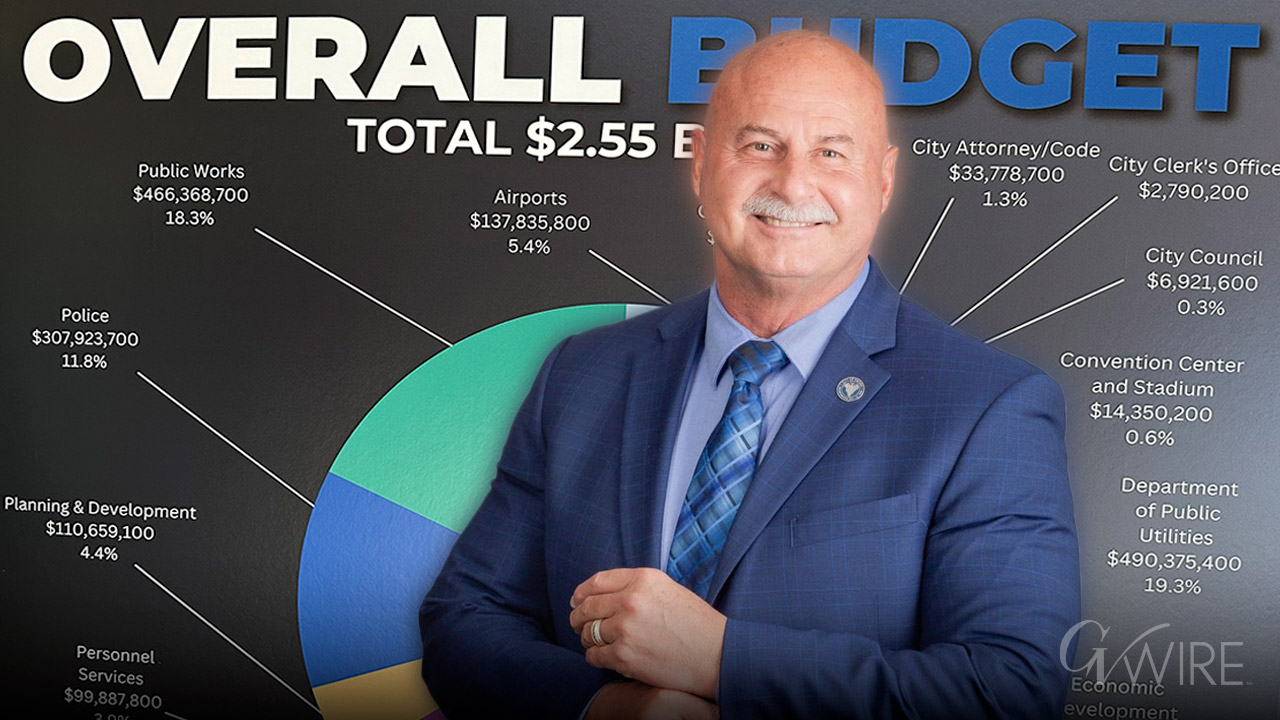
A day after presenting his record-setting $2.55 billion budget to media, Fresno Mayor Jerry Dyer made his pitch to councilmembers Thursday.
As Dyer warned that next five years will likely be spent in the red, the discussion quickly turned to the city’s long-term financial outlook.
That conversation included a long-term planning proposal for development in southeast Fresno, which Councilmember Tyler Maxwell said could provide Fresno with good paying jobs. He said the city “is not pulling in the revenue it needs to sustain a city of its size and its needs.”

He said the city needs to make land available for affordable housing or job sectors.
“We’re looking at a number of things. One of them is an open and willing city that is allowing itself to be part of the conversation by proposing areas for them to do business and preparing a workforce that’s ready to enter into that business,” Maxwell said.
‘Fresno Can’t Have Nice Things’: Karbassi
For the third year in a row, city departments have had to cut spending, Dyer said. Despite growth in property tax and sales revenue, Fresno cut $34.5 million in spending to reach a balanced budget without dipping into reserves.
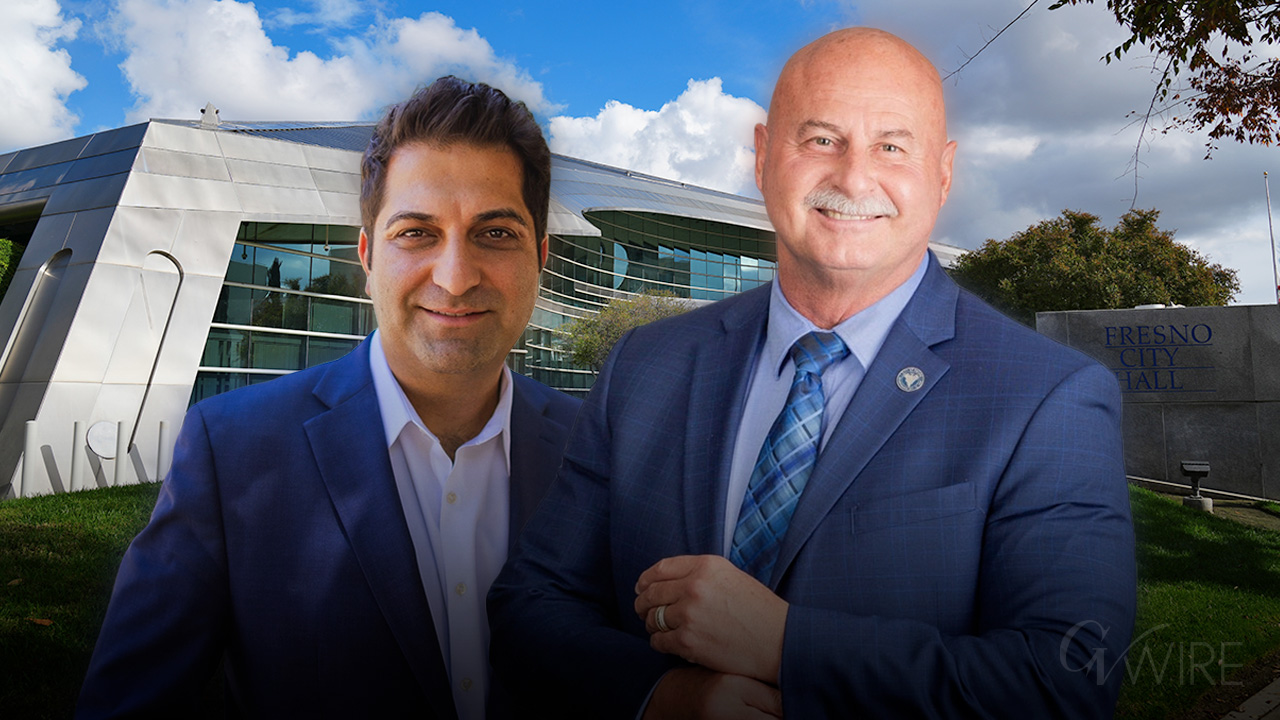
City Councilmember Mike Karbassi said the problem has gone beyond a “spending problem” and become a revenue problem.
Alluding to a pending fight for a new northwest Costco that could bring in $15 million a year in sales tax revenue, Karbassi said at the meeting that legal fights over commercial centers keep Fresno’s tax base from growing.
“Fresno can’t have nice things,” Karbassi said, referring to growth opponents.
Plaintiffs in a lawsuit opposing the proposed Costco have said that the plan would bring excessive traffic and greenhouse gases to the area, to which a Fresno County judge in 2025 agreed. The city will review a revised plan city staff say meets the judge’s requirements.
Dyer on FUSD Trustees’ SEDA Vote
Later this summer, Dyer said he will present councilmembers with detailed financial plans for the Southeast Development Area. The south SEDA plan, Dyer said, will set Fresno up far into the future to attract residents and businesses.
Dyer’s latest proposal refocuses the 9,000-acre area to 1,500 acres in the southern portion that would mostly be dedicated to manufacturing.
Opponents to SEDA say the debt needed to pay for the water and sewer infrastructure would come at the cost of developing in the urban core.
A majority of Fresno Unified trustees on Wednesday brought up similar reasons for stopping SEDA before it gets off the ground.
Trustees Veva Islas, Andy Levine, Valerie Davis, and Keshia Thomas opposed the city’s land use plan, saying in large part that it would result in declining enrollment in Fresno Unified. However, the district’s chief of operations, Paul Idsvoog, stated that the SEDA-caused loss of students would be negligible, averaging 29 a year.
Dyer said trustees voted against opening up land for advanced manufacturing land that could provide future jobs for students.
“For the life of me, I can’t understand it because we have one-in-four people living below the poverty line,” Dyer said at the meeting.
Karbassi told GV Wire that SEDA “right now is for the people starting kindergarten.” The discussion, however, has become political. He said the district did not oppose the city’s 2025 plan to develop in west Fresno, which is also outside Fresno Unified.
“I find it really ironic that they didn’t raise a peep about the West Area plan when that dramatically helps Central Unified,” Karbassi said.
SEDA Ultimately a ‘Drain’ On Long-Term Growth: Arias
Not all councilmembers were in agreement about SEDA’s ability to deliver future revenue.
Councilmember Annalisa Perea said the city needs to weigh the cost implications. She said she would wait to see Dyer’s plan before making a decision.
During the meeting, she said ministerial plans — which fast-track development by bypassing public comment periods for projects that meet land use codes — would make building faster.
Councilmember Miguel Arias, who was not present at the meeting, told GV Wire that SEDA’s infrastructure demands would ultimately be a drain on the general fund over time.
“I’d rather see economic development focused inward — redevelopment, infill, housing, and revitalization in existing parts of the city where infrastructure already exists and where the return to taxpayers is stronger,” Arias said.
He said a stronger approach is investing in existing neighborhoods.
City Councilmember Brandon Vang, in a statement to GV Wire, echoed that strategy.
“We must pursue responsible economic growth to strengthen the city’s long-term financial stability,” Vang said. “I will continue supporting our infill development program and modernizing land use policies to streamline development and attract private investment into underutilized areas throughout the city.
“We should also remain open to strategic public-private partnerships that can help deliver infrastructure, commercial investment, housing opportunities, and job creation in areas that have historically lacked economic investment across the city.”
Council President Nelson Esparza said SEDA could accomplish that inner city investment by redirecting revenue. When the Fresno City Council in December voted to send the SEDA plan back to city staff, he added in several requests including evaluating a possible additional tax on properties there to pay for properties along Blackstone Avenue.
Does City’s PLA Pay Off?
In a conversation with GV Wire, Councilmember Nick Richardson said the city needs to be prepared to deal with diminished services if expenditures continue to outpace revenues.
“Sometimes as a strict fiscal conservative, it can be a little lonely,” Richardson said.
While other departments were tasked with calculating attrition rates into their budgets, Dyer did not ask councilmembers to do the same. While gains would be small, Richardson said the council needs to show leadership by, for example, cutting staff hours.
Richardson said that when he proposed cutting from the council budget in fiscal year 2026, he received a lot of blowback.
“You would think I had just run over their cat in front of them,” Richardson said.
He also said that when the city’s project labor agreement — a contractual agreement to use a certain level of union labor on city projects — expires at the end of the year, the city needs to reevaluate the returns on those policies.
“Labor unions don’t understand this or necessarily care,” Richardson said.
A 2024 report indicated that the city’s PLA was failing to deliver promised local jobs.
The post Fresno’s Spending to Surpass Revenues for Next 5 Years. What’s the Plan? appeared first on GV Wire.