US Awaits Tehran’s Response to Peace Proposal
 QWER
QWER
The United States was waiting Thursday for Iran to convey its response to the latest American proposal to end the war, after public messages from top-ranking officials on both sides suggested a burst of behind-the-scenes diplomatic activity.
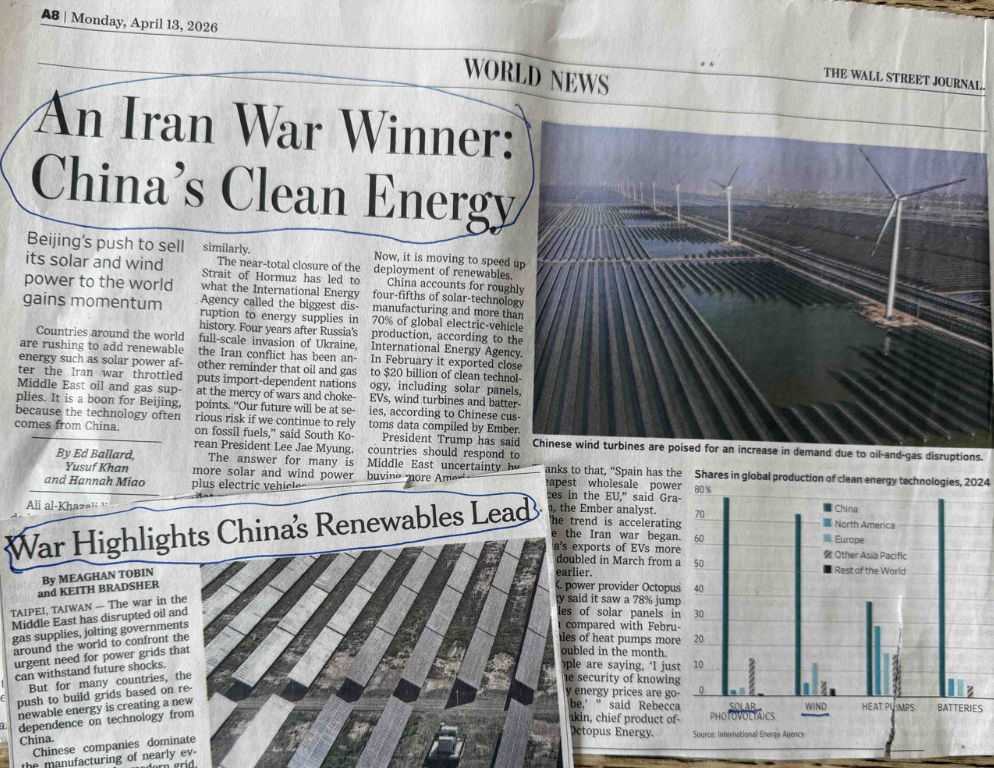
Business leaders, consumers, politicians, shipping companies and many others around the world have also been watching closely for signs of a breakthrough. The conflict, which has dragged on into a third month and prompted Iran and the United States to implement rival blockades around the Strait of Hormuz, has choked off a major oil transit route, wreaking havoc on global supply chains and causing energy prices to spike.
Iran’s Foreign Ministry spokesperson, Esmail Baghaei, said late Wednesday that his government was reviewing an American response to a 14-point Iranian proposal to end the war and would give its response to Pakistan, a key mediator. Neither Tehran nor Washington has said what the U.S. response entails.

“The exchange of messages through the Pakistani intermediary is ongoing, and reviews of the exchanged texts are continuing,” Baghaei told IRIB, Iran’s state broadcaster.
Earlier in the day, another Iranian official had dismissed a reported proposal to end the war as a “list of American wishes.”
In a sign of further diplomatic activity Thursday, Iranian Foreign Minister Abbas Araghchi held a phone call with his Pakistani counterpart, according to brief statements from both ministries. Hours earlier, a spokesperson for Pakistan’s Foreign Ministry said that Islamabad was optimistic about a deal, while declining to elaborate on what it would include. “We expect an agreement sooner rather than later,” the spokesperson, Tahir Andrabi, told reporters.
President Donald Trump, after threatening more attacks, said Wednesday that there had been “very good talks” with Iran, adding: “We’re in good shape, and now we’re doing well, and we have to get what we have to get.” Earlier in the day, Trump had issued a new ultimatum to Iran, threatening to restart attacks “at a much higher level and intensity” if Iran reneged on apparent concessions. He did not elaborate on what those were.
The mixed signals came a day after Trump abruptly paused a new U.S. military effort to protect ships in the Strait of Hormuz, citing “great progress” in talks with Tehran. The uncertainty did little to ease concerns about the strait, the key oil and gas shipping route that Iranian forces effectively closed in retaliation after the United States and Israel began the war in late February.
In the absence of any peace deal, the two sides held down a shaky ceasefire despite a standoff over the strait, with both claiming control of the waterway.
Here’s What Else We’re Covering:
— Ship attack: Iranian diplomats Thursday denied that Iranian armed forces had played a role in an explosion that caused a fire on a South Korean cargo ship Monday. In a statement, Iran’s embassy to South Korea reiterated warnings against any vessel navigating the Strait of Hormuz without Iranian permission and suggested that responsibility for “unintended incidents” lay with “parties that proceed with transit” without its approval.
— Iranian tanker: A U.S. Navy plane disabled an Iranian-flagged oil tanker that was trying to cross the American blockade on Iranian ports Wednesday, U.S. Central Command said. The American F/A-18 Super Hornet fired on the ship’s rudder, and the vessel is “no longer transiting to Iran.”
—
This article originally appeared in The New York Times.
By Qasim Nauman and Leo Sands/Arash Khamooshi
c. 2026 The New York Times Company
The post US Awaits Tehran’s Response to Peace Proposal appeared first on GV Wire.