Swalwell’s Exit Injects ‘Chaos’ Into California Governor’s Race
 QWER
QWER
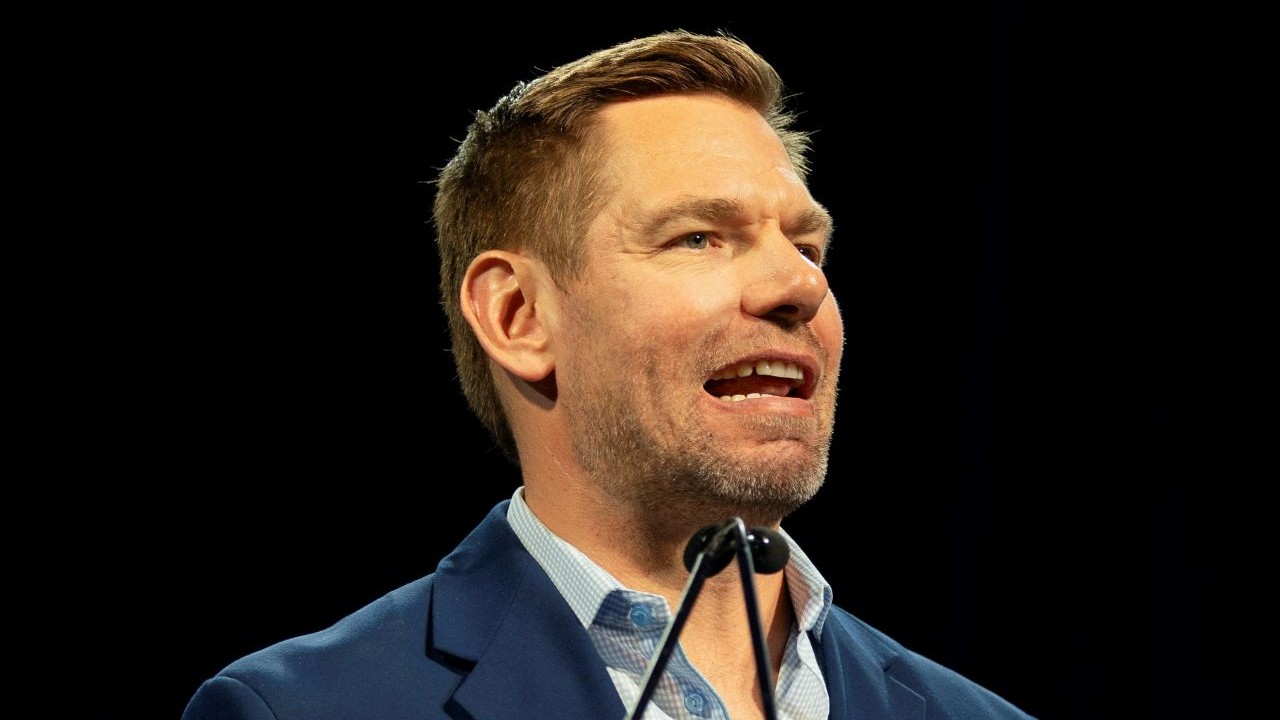
SACRAMENTO, Calif. — One of the sleepiest governor’s races in recent California history has turned into a mad scramble after the sudden departure of Eric Swalwell amid sexual assault allegations.
As soon as the first accusations hit Friday afternoon, Democratic candidates and potential donors blew up phones across California with text messages and phone calls. Social media users hyped their new favorites online.
And in a turbulent race that has grabbed the attention of voters thanks to Swalwell’s implosion, longshot candidates have newfound reason to believe they can still mount a last-minute comeback.

“Everyone just feels chaos and is scrambling,” said Marva Diaz, a Democratic strategist who is the publisher of California Target Book, which handicaps state races.
Merely one week ago, Swalwell strode into a town hall at a Masonic lodge in Sacramento as a Democratic front-runner who seemed confident he would be the next governor of California.
Now, he has resigned from Congress and faces criminal investigation, although he has denied the allegations against him. And several of his Democratic rivals appeared at a forum Tuesday night in the same capital city, trying to seize momentum in the race.
Under California’s nonpartisan primary system, the two candidates who get the most votes in the June 2 election, regardless of party, will face off in the November general election.
It seems likely that only one Democrat will emerge from the seven high-profile candidates still running to secure a spot in the general election. Although Republicans have fewer voters in the state, their party is fielding only two prominent candidates, and one of them, Steve Hilton, recently received President Donald Trump’s endorsement.
Swalwell’s departure seemed most likely to benefit the two Democrats who had been polling closest to him: Katie Porter, a former member of Congress who gained fame grilling executives on Capitol Hill with stern questions and a whiteboard; and Tom Steyer, a billionaire who has been active in progressive politics since leaving the finance world in 2012.
Both have positioned themselves as anti-Trump liberals and are more familiar to voters than many others in the large field.
Steyer has flooded the airwaves with his commercials by spending more than $120 million from his personal fortune. He has cast his wealth as an assurance that he would not be swayed by corporations.
“I don’t have to listen to them because I’m not taking their money,” Steyer said during a candidate forum Tuesday in Sacramento.
The board of the California Teachers Association, which had endorsed Swalwell, met Tuesday and decided to endorse Steyer. It was the first major Swalwell backer to move to a different candidate.
The Service Employees International Union, another powerful union that had endorsed Swalwell and had set aside millions of dollars to support him, has not yet decided how to proceed.
Some Democrats who were on their last campaign breath — doing so badly in the polls that their own state party leaders had urged them to leave the race — feel they have a new path to victory.
In the immediate aftermath of Swalwell’s exit, money from wealthy individuals was coalescing around Matt Mahan, the mayor of San Jose, who has won over tech leaders but has middling support in the polls.
Matt Rodriguez, who runs an independent committee backing Mahan called Back to Basics, told supporters in a memo Tuesday that the race “has fundamentally shifted” since Swalwell’s departure and that the group now had an opportunity to introduce Mahan to voters just as they were beginning to pay real attention to the race.
Rodriguez said that his groups had raised more than $12 million in pledges since Swalwell’s scandal began and was beginning a $14 million ad buy.
“Everything’s changed,” Rodriguez said in an interview.
On Monday, Back to Basics disclosed more than $7 million in new donations, with Rodriguez saying additional millions arrived Tuesday. Some of that money came through a separate Silicon Valley fundraising drive that had been trying to raise $35 million before releasing the money, but decided to transfer some of it early to capitalize on the Swalwell vacuum.
It’s not clear that Silicon Valley money will be enough to boost Mahan’s chances. His tech boosters have so far barely moved the polling needle with their dollars. And the Democratic establishment has generally ignored Mahan, seeing him as too aligned with billionaires and too moderate.
Xavier Becerra, another candidate with lackluster poll numbers, has seen a surge of interest on social media in the days since the accusations against Swalwell were first published in the San Francisco Chronicle and on CNN.
The campaign for Becerra, a former California attorney general who was health and human services secretary under President Joe Biden, reported 1.59 million views on Instagram since Friday, compared with 90,400 views in the four days before. Becerra has also seen a sharp increase in interest from audiences on other platforms.
“I’m not the richest, nor the slickest, candidate in this race, but I am the most experienced,” he said at Tuesday’s candidate forum.
Time is running short for underdog candidates to make a surge. Mail ballots, which is how the vast majority of Californians cast their votes, will be sent out the first week of May for the June 2 primary.
Antonio Villaraigosa, a former mayor of Los Angeles who also had middling poll numbers, is looking to make his own move and is working to keep Becerra from gaining momentum. He has increased his attacks, focusing on the child migrant crisis during Becerra’s tenure in the Biden administration and on a corruption scandal that engulfed two of Becerra’s top aides last fall.
Villaraigosa’s campaign aides held a Zoom meeting with some of Sacramento’s top lobbyists Tuesday and shared a presentation to make the case that he can win. They argued that the race was wide open and that the other Democratic candidates had plateaued.
“Now is the time to rally behind Antonio and give him a boost so he can surge into the lead,” the presentation said.
The Swalwell fallout could give campaigns and their donors more reason to spend in the final weeks. The race Tuesday officially became the most expensive gubernatorial primary on record, according to AdImpact, an ad tracking firm, with about $156 million spent so far.
—
This article originally appeared in The New York Times.
By Laurel Rosenhall and Theodore Schleifer
c. 2026 The New York Times Company
The post Swalwell’s Exit Injects ‘Chaos’ Into California Governor’s Race appeared first on GV Wire.