Supreme Court backs GOP in Louisiana redistricting, limiting Black voters’ influence
 QWER
QWER
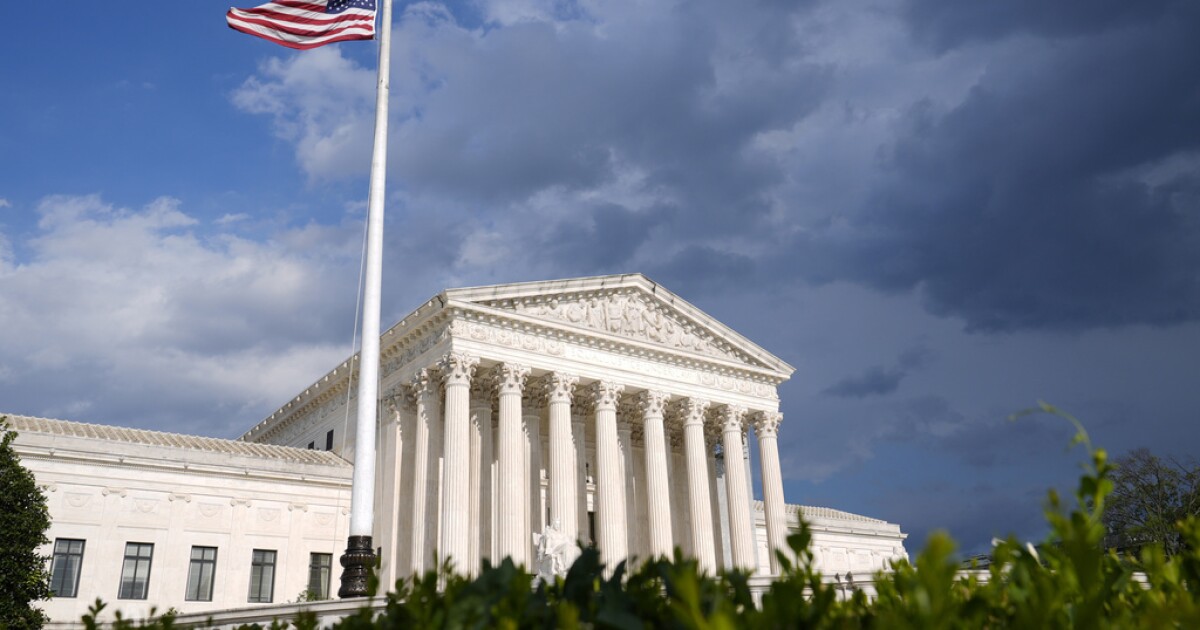
The U.S. Supreme Court ruled in favor of Republicans on Wednesday by redrawing a Black majority U.S. House district in the state.
The ruling is expected to weaken the Voting Rights Act, which places stipulations that the drawing of House districts cannot dilute the voting power of minority groups. The ruling could go well beyond Louisiana, where other states could redraw their districts, potentially giving the GOP an even larger edge.
After the state of Louisiana redrew its congressional boundaries in 2021, the state had one out of its six districts that were majority Black. Lower courts ruled that by only having one majority Black district, Louisiana violated Section 2 of the Voting Rights Act.
Subsequently, Louisiana redrew its boundaries again, this time creating two majority-Black districts. But some groups have argued that this second majority Black district also violated Section 2.
The Voting Rights Act has long been interpreted to mean that mapmakers cannot dilute minority groups voting power. Efforts such as packing or cracking minority voters into districts have been viewed as illegal since.
But courts have long allowed political gerrymandering, the practice of drawing districts to favor a political party over another. Like in most states, there are clear racial divides in voting between races. Black voters in Louisiana overwhelmingly back Democrats, while White voters tend to back Republicans.
Section 2 of the Voting Rights Act has been a critical tool in safeguarding the promise that people of color can participate in our democracy on equal terms, said Sophia Lin Lakin, director of the ACLUs Voting Rights Project. It has been our shield against discriminatory maps and our answer to laws designed to suppress the vote. Congress passed the Voting Rights Act with overwhelming, bipartisan support and reauthorized it again and again because our leaders understood a fundamental truth: you cannot cure discrimination by pretending it doesn't exist."