Storm Season Is Here and the National Weather Service Is Short Handed
 QWER
QWER
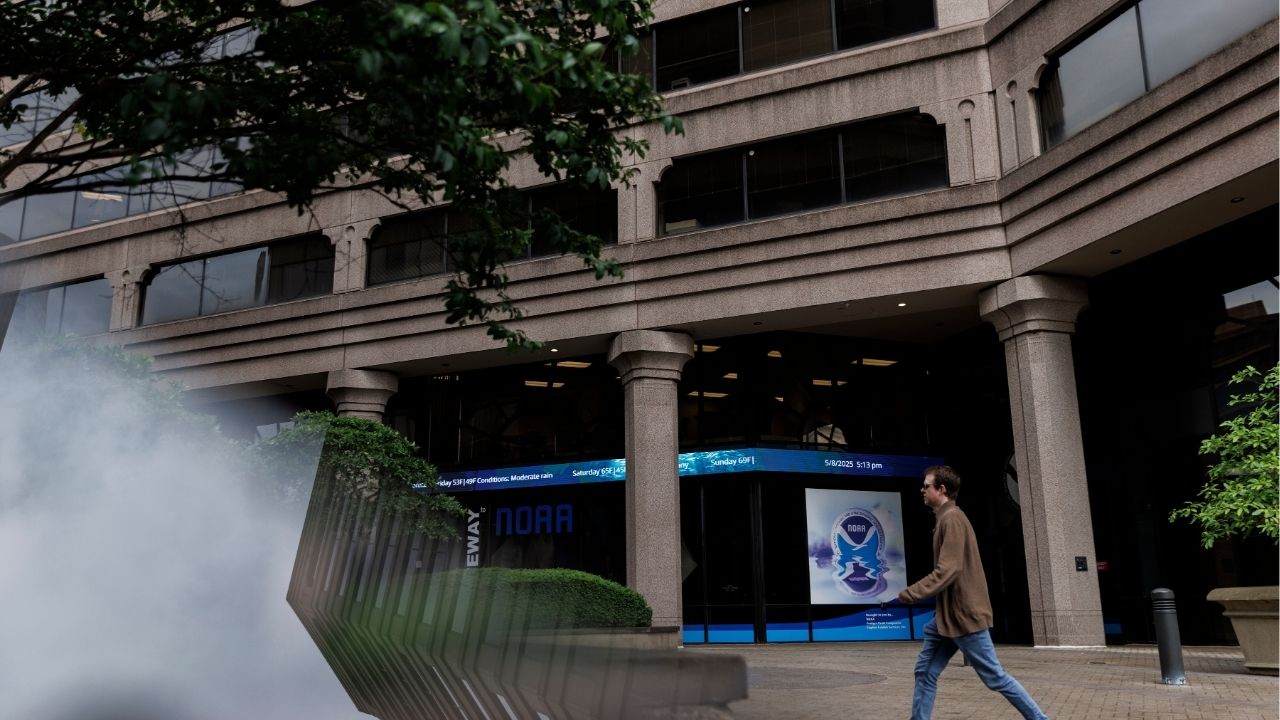
The National Weather Service is struggling to recover from last year’s deep staff cuts, raising doubts among some meteorologists about whether the agency is ready for severe storms or hurricane season, which starts next month.
One key facility in Oklahoma that leads tornado forecasting and warnings has an unusual five open positions, its website shows. Others around the country will lose meteorologists temporarily as officials shuffle them to cities that will host World Cup soccer games in June and July, according to an internal email reviewed by The New York Times.
The agency’s roster of more than 2,500 scientists shrank by about 15% last year through firings and early retirements. The weather service’s data and expertise forms the backbone for all kinds of forecasts, including those shared by television meteorologists and smartphone apps.

The government has been trying to hire back to reverse the damage. In the last six months, officials have hired more than 200 meteorologists and hydrologists — scientists responsible for issuing forecasts and warnings of imminent tornadoes, floods and other severe weather. Neil Jacobs, the head of the National Oceanic and Atmospheric Administration, which oversees the weather service, told a House committee this week that the agency had recently extended job orders to another 206 potential new staffers.
But internal agency data reviewed by the Times shows that as of early last month, the workforce of meteorologists and hydrologists was about 300 fewer than it had been in late 2024.
Those who remain have struggled to keep up with the workload, Ken Graham, the weather service’s director, told the Times in an interview in late January. Graham said then he hoped a reorganization still in its early stages would help.
“People are burning out,” Graham said.
The weather service posted job listings last week with a goal of adding 145 additional entry-level meteorologists across the country over the next five months, said Kim Doster, a weather service spokesperson. Graham told agency staff in an email sent last week and reviewed by the Times that more hiring would follow. But bringing new employees on board and training them takes months, delaying the arrival of reinforcements, meteorologists said.
“Preventing and recovering from burnout takes time, but recent hiring has helped spread the workload,” Doster said. “As with many public safety roles, being a meteorologist can also be a demanding and stressful job, but our forecasters are dedicated and skilled professionals whom the public and our partners can continue to rely on.”
As storm risks ramp up and the World Cup and hurricane season approach, meteorologists remain concerned about whether some local offices have the bandwidth to keep up. The plan to shift more forecasters to World Cup host cities could boost the safety of tens of thousands of people gathering at outdoor stadiums during stormy summer months, but it could also raise the risk that severe weather warnings are delayed — or missed altogether — elsewhere, current and former staffers said.
The result of all this churn is that the ranks at the weather service are generally less experienced. As of last month, the average tenure was 15 years, compared with more than 25 years a decade ago, according to staffing data and agency data.
Alan Gerard, a meteorologist who spent 35 years at the weather service and NOAA’s National Severe Storms Laboratory before retiring early last year, said the agency is showing some signs of inexperience. Some warnings have appeared overly cautious, Gerard said, while others were incomplete — such as when no tornado watch was issued when a deadly March tornado hit a part of southern Michigan.
“It seems like there is almost like a crisis of confidence,” Gerard said. “There are certain events where there are a ton of warnings being issued and then other events where you can see slow warnings and late warnings.”
The weather service offices that were forecasting that March tornado outbreak were fully staffed and issued tornado warnings when severe weather threats materialized, Doster said.
Observers also said the talent pipeline at the weather service was broken after younger scientists were fired last year, among the thousands of government employees still in probationary employment status whose jobs were cut by the administration.
“By getting rid of all the younger people and then all the experience and then only leaving the people in the middle, this is going to cost a tremendous amount to build the agency back while also trying to modernize,” said Victor Proton, a meteorologist who took a buyout to leave the weather service in April 2025 after 28 years at the agency.
Staffing shortages last year contributed to a decline in launches of weather balloons, which carry devices that collect wind and temperature data that is fed into supercomputer weather models to guide simulations of future conditions. While a handful of offices have continued skipping some of the twice-daily weather balloon launches this year, Doster said that’s because of equipment issues and helium shortages, not staffing.
Over the past several months, a new vision for the agency has begun to emerge: A tiered staffing approach that shifts employees away from more rural areas with quieter weather to locations where the most people and property frequently face severe weather threats.
Some officials called the cuts ordered by the Trump administration and the subsequent attempt to rehire an “opportunity” to reconsider the organization’s fundamental operations.
“Not every office has the same workload,” Graham said in January. “I can beef up some of the offices that have the highest workload, keep everybody 24/7, but eliminate some of the burnout that we have in the busiest offices.”
But efforts to turn that vision into reality have been slow, despite steps to help the agency hire faster than usual.
After months of lobbying by Graham — and the urgency of July 4 floods that took Texas Hill Country by surprise and killed dozens of children at a summer camp — President Donald Trump last summer exempted weather service employees from a federal hiring freeze. That order also gave Graham a new level of hiring authority, allowing him to bypass normal protocols and select new staffers himself.
Low morale prompted Graham to return to the front lines of forecasting, stepping up in March to help issue warnings as severe storms swept through the Washington, D.C., area. He told staff it was “to show my support for the entire NWS team,” according to Christopher Vaccaro, an agency spokesperson.
Otherwise, Graham said he is focused on rolling out plans not just to hire more scientists, but to reshape the agency for a new era of weather volatility, using ideas he was pursuing even before Trump took office. The agency is moving forward with long-planned efforts to embed meteorologists in state and local emergency operations centers where officials make decisions on everything from school closings to travel bans to evacuation orders.
“It’s not a plan on a shelf,” Graham said. “We’re doing it.”
—
This article originally appeared in The New York Times.
By Scott Dance, Judson Jones and Amy Graff/Moriah Ratner
c. 2026 The New York Times Company
The post Storm Season Is Here and the National Weather Service Is Short Handed appeared first on GV Wire.