Sam Altman Testifies That Elon Musk Wanted Control of OpenAI
 QWER
QWER
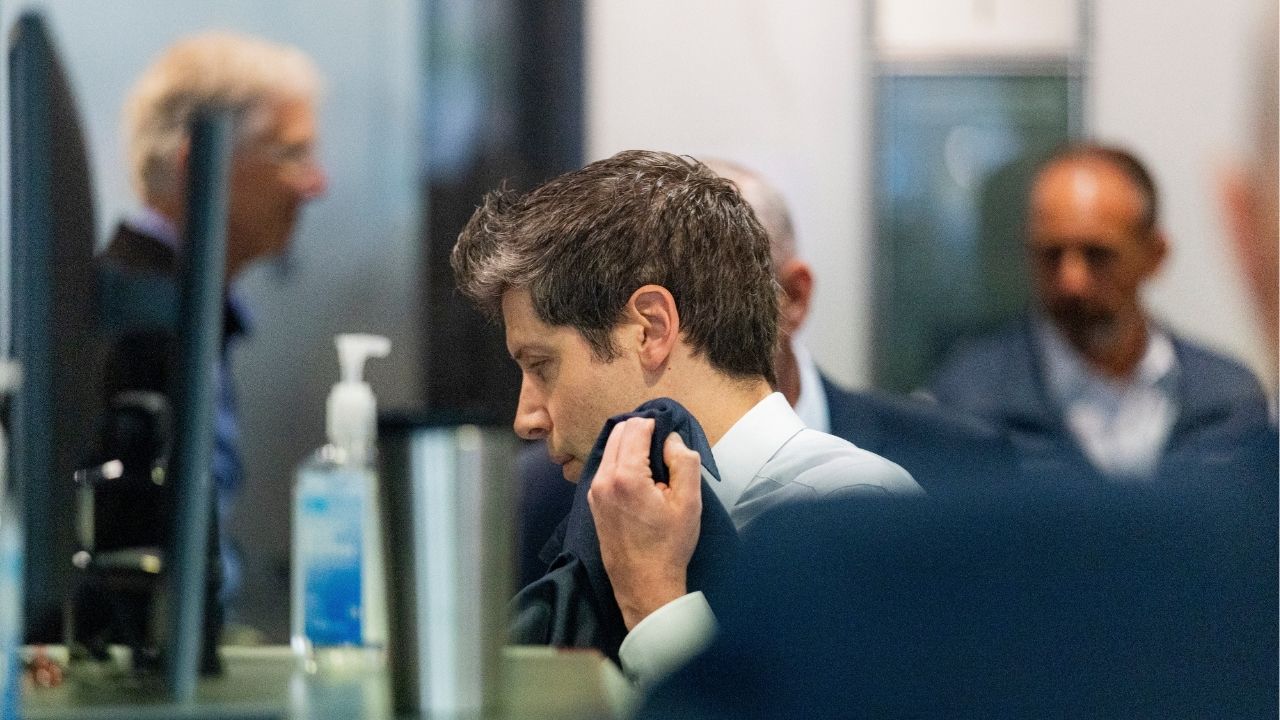
OAKLAND, Calif. — Sam Altman, the CEO of OpenAI, testified Tuesday that Elon Musk wanted complete control of the company and pushed for it to become a part of Tesla before leaving the startup he helped found.
Altman’s testimony, coming in the third week of a blockbuster trial in Oakland, California, was intended to pierce Musk’s claim that no one person should control the future of artificial intelligence and to show that the billionaire was on board with OpenAI’s shift into a commercial venture.
Altman is defending himself and his company against allegations by Musk, who co-founded OpenAI, that the startup betrayed its founding mission as a nonprofit dedicated to the creation of AI that is safe for the world. After Musk left the company following a power struggle in 2017, Altman attached a for-profit company to OpenAI and raised billions of dollars from investors.

That decision — which helped set off the global AI boom with the launch of ChatGPT — is at the crux of Musk’s case.
“It is not OK to steal a charity,” Musk said during his first day on the stand last month.
On Tuesday, Altman disputed that sentiment. “It feels difficult to even wrap my head around that framing,” he said.
Musk’s team has tried to portray Altman as a slippery operator who says different things to different people. In tense cross-examination that prompted gasps in the courtroom, Musk’s lead counsel, Steven Molo, attacked Altman’s credibility, with the executive responding quietly and tersely. At one point, Molo asked him directly, “Are you completely trustworthy?”
“I believe so,” Altman responded.
Musk’s legal team called a series of high-profile witnesses over the first two weeks of the trial, including Satya Nadella, Microsoft’s CEO; Greg Brockman, OpenAI’s president and co-founder; and Shivon Zilis, Musk’s business associate and the mother of four of his children. Musk was the victim of a bait-and-switch after he funded the nonprofit, his legal team argued.
Now, it’s OpenAI’s turn. The startup’s lawyers have already argued that Musk’s case is “sour grapes.” They have said the timing of Musk’s lawsuit, filed in 2024, years after OpenAI first pursued commercial investments, was intended to benefit his own AI startup, xAI. Throughout witness cross-examinations, OpenAI’s counsel has tried to show Musk also repeatedly tried to transform the AI lab into a for-profit company.
Altman has much at stake. Musk is asking for more than $150 billion in damages from OpenAI and Microsoft, OpenAI’s primary partner, and said any damages would be shared with the OpenAI nonprofit. He is also asking the court to remove Altman from the startup’s board and stop a shift the company recently made to operate as a for-profit company.
If Musk loses, Altman would likely solidify control of OpenAI, which is now valued at about $730 billion. And the company would be free to pursue a data center expansion plan that could cost hundreds of billions of dollars as the AI startup appears headed toward one of the biggest initial public offerings in history.
(The New York Times has sued OpenAI and Microsoft, claiming copyright infringement of news content related to AI systems. The two companies have denied the suit’s claims.)
Here’s What Else to Know:
— Major stakes: The trial’s outcome could upend the AI landscape. A win for Musk would also be a win for OpenAI’s competitors, including industry giants like Google and young companies like Anthropic, as well as international competitors such as China’s DeepSeek.
— Trial logistics: Closing arguments are expected as soon as this week, followed by jury deliberations. If the jury rules in Musk’s favor, Judge Yvonne Gonzalez Rogers — who also oversaw a high-profile lawsuit against Apple over its control of the App Store — will decide on monetary damages and other remedies.
— Courtroom circus: The case has given an up-close-and-personal look at how two men worth more than a combined $670 billion function under extreme pressure. Musk, 54, appeared to have brought a squeezable stress ball along with him, clutching it while fidgeting during his testimony. Altman, 41, occasionally locked eyes with others while walking from the private witness area to the courtroom.
—
This article originally appeared in The New York Times.
By Cade Metz and Mike Isaac/Jason Henry
c. 2026 The New York Times Company
The post Sam Altman Testifies That Elon Musk Wanted Control of OpenAI appeared first on GV Wire.