New York Times Scrambles to Defend Pulitzer-Winning Photo of 'Starving' Gazan
 QWER
QWER
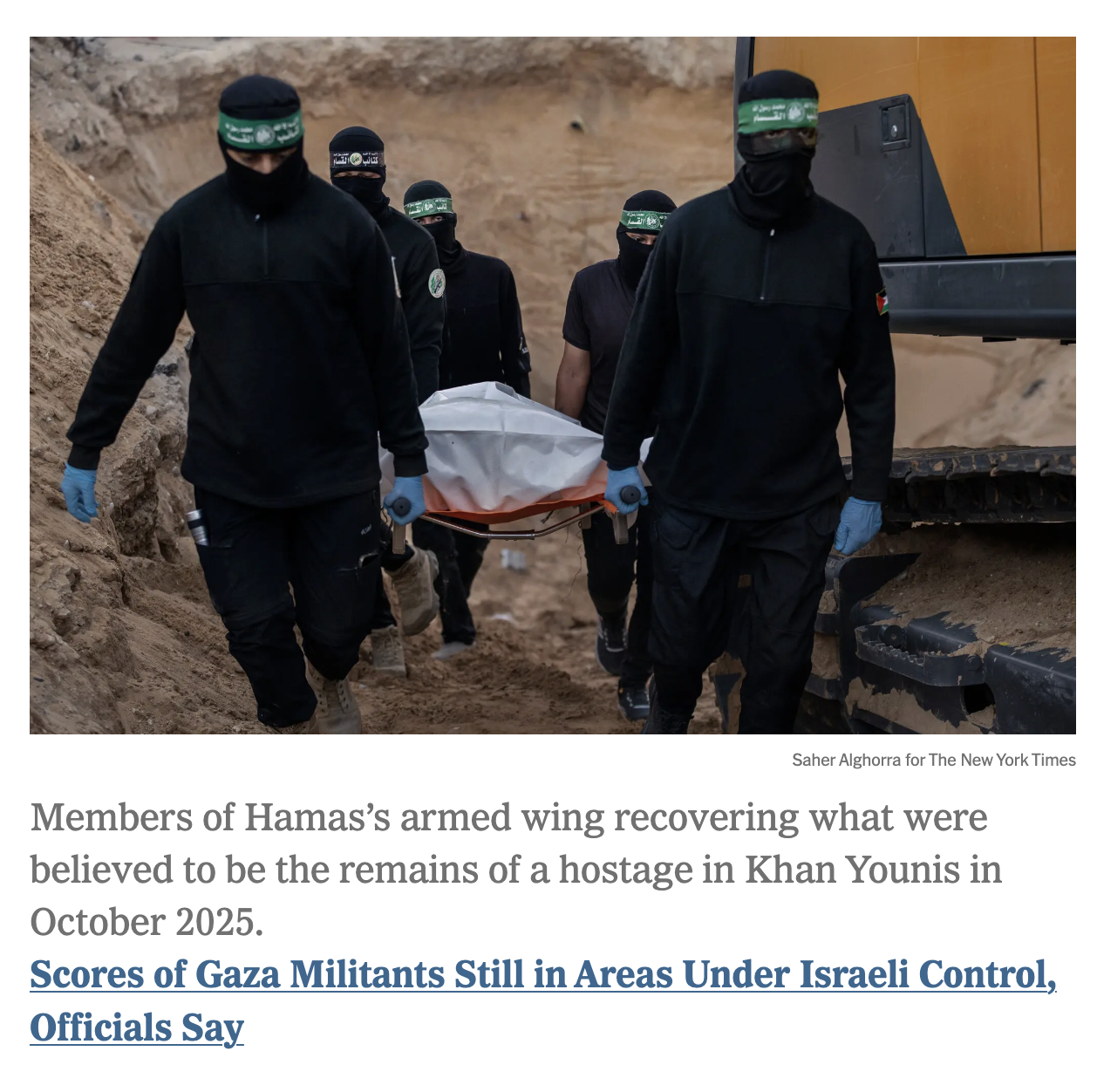
The New York Times is scrambling to defend the integrity of its Gaza-based photographer and his work, which won a Pulitzer Prize on Monday, after a press watchdog organization accused him of "staged scenes" that were closely coordinated with the Hamas terrorist organization.
The prizes largely honored articles that bashed Trump—his alleged abuses of power, his destruction of the federal workforce, his venality—or Israel.
What has kicked up something of a storm—at least enough to generate an official if somewhat vague defense from the New York Times—is the prize to Times contributing photographer Saher Alghorra for pictures he took in areas of Gaza that were largely under the control of Hamas terrorists. The New York Times has conceded "Hamas restricts journalists in Gaza," but it’s not clear how that affected the work of Alghorra, who, one prize website reports, "studied public relations, media and photography at the University of Palestine." In 2024 a friend started a GoFundMe to try to raise $36,000 to evacuate him and his family from Gaza, but that campaign was paused.
The watchdog group Honest Reporting said the Alghorra Pulitzer is "a prize built on staged scenes, a manufactured ‘famine’ narrative, and intimate access to Hamas terrorists."
Said Honest Reporting, "One of the winning photos shows 2‑year‑old Yazan Abu al‑Foul, turned by the NYT into the face of children ‘starving’ because of Israel. Yet the original wire copy notes that Yazan has four older siblings – none of whom appear in the Pulitzer portfolio – and the same mother and child were repeatedly shot by multiple agencies in near‑identical poses, raising serious questions about staging, consent and how one family was repackaged into a global ‘famine’ poster‑child." Many of the emaciated-appearing children used in press photographs aimed at charging Israel with imposing starvation had underlying preexisting other health conditions that caused their distorted appearance, though Yazan Abu al‑Foul is not known to be one of those.
The watchdog group went on, "Another Pulitzer‑winning image shows Hamas terrorists in Khan Younis reportedly carrying the remains of an Israeli hostage – a glossy, carefully composed shot that by definition required close coordination and trust with an internationally‑designated terror group. And this is the same Saher Alghorra HonestReporting exposed for calling the Bibas family 'prisoners' in his own Instagram post, faithfully echoing Hamas’ language for murdered hostages."
Said Honest Reporting, "By honoring him, the Pulitzers aren’t rewarding courageous war photography; they’re legitimizing Hamas‑adjacent narratives built on emotional manipulation, staged imagery and unrivaled access to a terror group. One day, people will ask how this passed as ‘journalism.’"
The New York Times pushed back with a response on X. "Saher Alghorra has documented hundreds of starving and malnourished children in Gaza, conducting intrepid photojournalism at personal risk so readers can see the consequences of war. This attack on his work is baseless," the newspaper said. "Jurors called Saher's work a ‘distinguished example’ of breaking news photography for his spontaneous coverage of these scenes in Gaza."
Asked for a more substantive response to the criticism, a Times spokesman referred the Washington Free Beacon back to the response posted on X.
If Alghorra did indeed coordinate with a blood-drenched terrorist organization, he wouldn’t be the first or last Times journalist to do so. A Times article appeared in print May 3 with named credit to eight Times journalists—an example of the Rule of Byline Inflation, which is that the reliability of any news article is inversely proportional to the number of reporters who have a byline on it. It contains the passage, "A senior Hezbollah official said on Thursday that the technology was low cost compared with Israeli weaponry but that it has made Israel’s military easy targets on the battlefield. He spoke on the condition of anonymity to discuss the group’s security matters." Now the Times is keeping secrets for Hezbollah? Maybe that one will win a Pulitzer next year.
The prizes are a reflection of the committee that awards them. The Free Beacon reported earlier this year that a Harvard professor who is one of the campus's most hard-line anti-Israel activists, Vijay Iyer, had joined the Pulitzer Board. The board is self-perpetuating and based at Columbia University, which also manages the Pulitzer endowment, employs its administrative staff, and hosts on the Columbia campus its jury meetings and annual awards dinner. Also on the board is Viet Thanh Nguyen, a professor at the University of Southern California who is an open supporter of a boycott against Israel. The dean of the Columbia Journalism School, anti-Trump activist Jelani Cobb, also sits on the board.
M. Gessen, a writer for the New York Times, won the prize in the opinion writing category for "an illuminating collection of reported essays on rising authoritarian regimes." The columns managed to bash both Israel and Trump. "Life under autocracy can be terrifying, as it already is in the United States for immigrants and trans people," wrote Gessen, who describes herself as "a person who doesn’t identify as either male or female."
Another Gessen column contended, "Even Israel’s massacre in Gaza, which makes Russia’s warfare in Ukraine look restrained, can’t produce new headlines after more than 19 months of indiscriminate bombing and warfare by starvation. It is news when two Israeli Embassy employees are murdered in Washington, D.C. But when entire Palestinian families are killed, or when Palestinian children die of malnutrition, it’s just another day in Gaza."
A third column contended, "In the last two years, as Israel has carried out a genocide against Palestinians and has all but dropped any pretense of democracy, many Israelis have come to dread telling people what country they are from." Using Prime Minister Benjamin Netanyahu’s nickname, it quoted someone reminding readers that "Trumpism and Bibism are joined at the hip."
Another column put the assassination of Republican political activist Charlie Kirk in this context: "I have been thinking of historical, rather than fictional, antecedents, in particular the assassination in 1938 of a Nazi diplomat in Paris by a Polish-German Jewish teenager named Herschel Grynszpan."
So far, the prize to Gessen’s columns—perhaps because the false accusation of genocide or likening Charlie Kirk to a Nazi is labeled as "opinion"—hasn’t generated much of a response, perhaps because no one who disagrees with them read them in the first place. (I should disclose here for disclosure’s sake that I’m fairly sure Gessen, who was then going by "Masha Gessen," was my colleague at the Forward newspaper in the 1990s, and that also Gessen is married to a friend of mine.)
The Times also on Tuesday announced that Katie Hill, who was communications director for Barack Obama from 2017 to 2021, would join the company as senior vice president, global head of communications and external affairs. She’ll be busy. The Equal Employment Opportunity Commission on May 5 sued the Times, alleging the newspaper "violated federal law when it passed over a white male employee for a promotion because of his race and/or sex." The Times said it "categorically rejects the politically motivated allegations brought by the Trump administration’s EEOC."
Historian James Hankins suggested on X that someone should start a "shadow Pulitzer committee"—like the Shadow Open Market Committee created as a check on the Federal Reserve—"to state who should really have won." Other journalism prizes do exist—in fact, there are so many of them that there are people working as "awards consultants" marketing their services to news organizations seeking "strategic guidance, category recommendations, calendar planning, entry preparation, editorial support, and project management." The Center for Integrity in News Reporting, whose trustees include Fox News’s Bret Baier, offers prizes of $25,000, which is more than the $15,000 that a Pulitzer pays.
The overall context here, in my view, though, is that of antisemitism at Columbia. Columbia signed a settlement with the Trump administration about its antisemitism problem, a problem that prompted the departure of its president, Baroness Minouche Shafik. You’ll know the Columbia antisemitism problem is fixed when the university stops shoveling Pulitzers at the New York Times for demonizing Israel. Until then, it all amounts to a bunch of lip service—the continuation of the "we don’t want no Zionists here" encampment by means of fancy-dress award ceremonies and $15,000 checks. It’s a lie that festers in an environment of intellectual conformity, protected from the challenges and free debate that expose lies and promote truth.
And, in this case, it’s largely funded by Pulitzer endowment money. It’s a cautionary tale to anyone considering donating endowment money to any of these institutions. You’d have been better off giving to Saher Alghorra’s GoFundMe. The contributor might not get a tax dedication, but the funds would be spent down immediately, while the donor was still alive and with some hope of exercising control.
The post New York Times Scrambles to Defend Pulitzer-Winning Photo of 'Starving' Gazan appeared first on .