'Moderate' Governor Abigail Spanberger Signs Bill Forcing Virginia Schools To Consider 'Restorative Disciplinary Practices' Before Suspending Students
 QWER
QWER
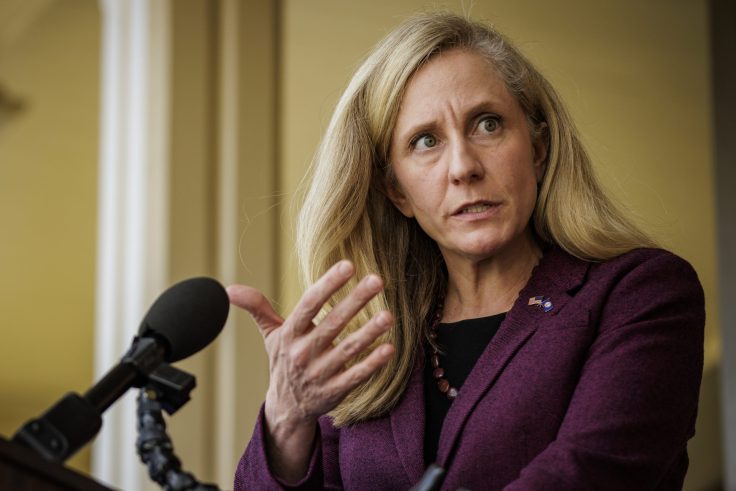
"Moderate" Virginia governor Abigail Spanberger signed into law a bill from her Democratic colleagues in the state legislature that forbids the state's public schools from suspending or expelling a student until they consider "restorative disciplinary practices" like "peer mediation" or a "restorative circle." Schools that choose not to deploy such practices must file a report explaining why they imposed "exclusionary discipline" rather than "an evidence-based restorative disciplinary practice."
The bill, introduced by Democratic state representative Delores McQuinn, prohibits "any public elementary school or secondary school student from being suspended, expelled, or excluded from attendance at school unless the school first considers at least one evidence-based restorative disciplinary practice." Examples of such practices listed in the bill include "mentoring, a peer jury, peer mediation, a post-conflict resolution program, a preventative program, a restorative circle, and any other disciplinary practice" that fits the following parameters:
— "Establishes and supports goals that increase connection to community, restores relationships, builds empathy, and ensures that all perspectives are considered"
— "Addresses the needs of those harmed and promotes healing"
— "Responds to behavior that violates expectations by balancing accountability with understanding of behavioral health needs, reducing disruption, and keeping students in school"
— "Engages individuals affected by an incident and includes community members reflecting the cultural and demographic diversity of the school community"
— "Determines responses through a collaborative process involving students, families, educators, and community members"
— "Provides solutions tailored to students' cultures"
— "Implements policies informed by the science of the social, emotional, and cognitive development of children"
Certain offenses, like "threat of use of a firearm or other weapon of mass harm" and "serious bodily injury to another," are exempt from the requirement. In other cases, if a school determines to suspend or expel a student before first deploying a "restorative disciplinary practice," the school must "document in the student's disciplinary record … the rationale for the decision to impose exclusionary discipline, including any factors supporting the decision not to utilize an evidence-based restorative disciplinary practice."
The bill passed the Virginia senate in a party-line vote in March, while one Republican in the state house voted in favor of the bill's final version after opposing the legislation in a previous vote. Spanberger signed the bill on Monday, and it will take effect next year.
The move follows controversial attempts to swap "exclusionary discipline"—that is, discipline that removes students from their usual classroom—with "restorative justice" in liberal enclaves like New York City and Portland, Ore. It also contradicts the moderate image Spanberger presented on the campaign trail as she ran to lead a state that elected a Republican governor just four years earlier.
Under left-wing mayor Bill de Blasio, New York City allocated millions of dollars toward "restorative justice" initiatives in schools, according to a Manhattan Institute report on the topic. Chronic absenteeism among city students went on to rise from 26.5 percent in 2018-19 to 34.8 percent in 2022-23, according to the report, while the number of incidents that required a response from the New York Police Department's school safety division rose from 1,200 in the first quarter of 2016 to 4,120 in the first quarter of 2025. In one case, a Jewish high school teacher in Brooklyn sued her district after students who subjected her to Nazi salutes and threats were sent to a "meditation room" rather than suspended, the Manhattan Institute report says.
"This measure reflects a decision to prioritize the interests of the most disruptive students over those who will suffer the consequences of their disruptions," Manhattan Institute fellow Rafael Mangual told the Washington Free Beacon. "Ultimately, Virginians should expect this bill to undermine the ability of educators and administrators to maintain order in their classrooms and on their campuses. Like all measures rooted in misconceptions and flawed assessments of racial disparity, this one will ultimately prove counterproductive—especially for those students stuck in schools with the highest rates of misconduct."
Spanberger's office did not respond to a request for comment.
While the Virginia bill does not detail exactly what "restorative disciplinary practices" like a "restorative circle" should look like, a guide on "restorative justice circles" from the Center for Justice Innovation, a left-wing racial justice organization, may provide clues.
"Rooted in centuries-old indigenous practices, they're meant to address harm and conflict by inviting everyone involved to really listen to each other," the guide says of the circles. "At the center of a restorative justice circle is a centerpiece, often a cloth or fabric to ground the conversation. On top of the centerpiece, participants in the circle can place photos, cards with important words or messages written on them, and other meaningful objects."
"A facilitator then starts with an opening ceremony—a breathing exercise, a song or poem, or a meditation—before passing around an object that serves as the talking piece," the guide continues. "Another crucial element of the circle, the talking piece gives the speaker a chance to share openly and uninterrupted, while inviting others to listen deeply."
Such circles were deployed in Fayetteville, Ark., as a result of a Walmart-backed equity plan, the Free Beacon reported. At Fayetteville High School, staff were instructed to address incidents like physical molestation with "restorative circles" in which teachers and students sit on the floor to "dispel any sense of hierarchy."
Such practices have prompted pushback in Virginia. In Newport News—a city on Virginia's southeastern coast in which a six-year-old shot his first-grade teacher in 2023—teachers complained that "students who assaulted classmates and staff were routinely allowed to stay in the classroom with few consequences," the Associated Press reported. The AP cited the teachers' criticism as an example of "restorative justice" practices prompting "questions … about whether a gentle approach can effectively address problems that disrupt classrooms."
Spanberger signed the "restorative disciplinary practices" bill among hundreds of others that passed during Virginia's 2026 legislative session. They include four bipartisan measures detailing billions of dollars in business investments in Virginia from companies like Eli Lilly and AstraZeneca. Though Spanberger took credit for "attracting" those investments, they were actually secured by her Republican predecessor, Glenn Youngkin, the Free Beacon reported.
The post 'Moderate' Governor Abigail Spanberger Signs Bill Forcing Virginia Schools To Consider 'Restorative Disciplinary Practices' Before Suspending Students appeared first on .