Justice Department Aims to Use Terrorism Laws to Target Mexican Officials
 QWER
QWER
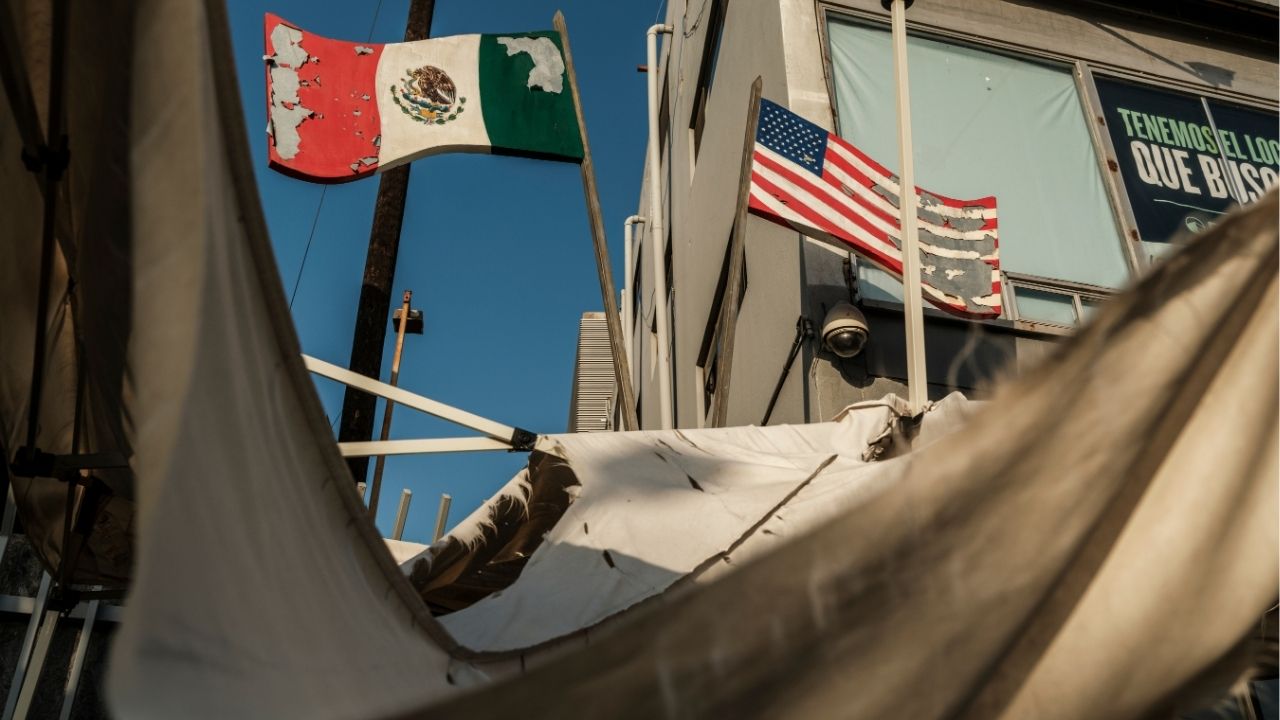
The Trump administration this week instructed federal prosecutors to use terrorism statutes to target Mexican officials complicit in the narcotics trade, a significant escalation in its campaign against drug trafficking from Mexico, according to a U.S. official familiar with the remarks.
That new directive was announced Wednesday by Aakash Singh, an associate deputy attorney general, during an internal conference call with prosecutors in regional offices and represents an aggressive new tactic in the administration’s counternarcotics strategy that is almost certain to further strain its relationship with Mexico.
The initiative is the latest expansion of a hard-line policy that has defined President Donald Trump’s agenda since his return to the White House last year, when he signed an executive order designating Latin American drug cartels as terrorist organizations. Within months, the U.S. military began blowing up boats in the Caribbean Sea and Pacific Ocean, killing nearly 200 people the administration says are drug smugglers.

The Justice Department directive, which has not been previously reported, comes two weeks after federal prosecutors in New York indicted the governor of Mexico’s Sinaloa state, who is also a member of the country’s governing party, and nine other current and former Mexican officials. Days earlier, the death of two CIA officers in a car crash in Mexico revealed a covert element of the White House’s clampdown on cartels. The developments have sharply intensified cross-border tensions.
Singh’s role includes setting priorities for the 93 U.S. attorneys, and his marching orders for them Wednesday were blunt and strikingly undiplomatic.
“We should be tripling the number of indictments of corrupt government officials in Mexico who are using their power and their positions to enable terrorists and monsters who traffic in misery and poison,” he told colleagues, according to the U.S. official, who was not authorized to speak publicly.
Prior U.S. indictments accusing Latin American officials of drug crimes have frayed bilateral relationships that include cooperation on many fronts. But Singh seemed to relish that prospect as he urged prosecutors to charge Mexican officials with providing material support to terrorist organizations, in addition to drug crimes.
“If that is an unwelcome development for Mexican government officials and they are offended that we’re doing that, I cannot think of a single thing I care about less,” he said. “If we are shaming and embarrassing them in the process, then that is the cherry on top for us.”
The Justice Department did not immediately respond to messages seeking comment.
President Claudia Sheinbaum of Mexico has made clear she is not happy with the U.S. decision last month to charge a sitting Mexican governor, Rubén Rocha Moya, and other officials with collaborating with drug cartels. She has refused to arrest Rocha, criticizing U.S. officials for not providing sufficient evidence, and she has repeatedly framed the accusations against him as a potential affront to Mexican sovereignty.
Rocha, who has temporarily stepped down, has denied the charges, instead accusing the Trump administration of politically targeting him to undermine Sheinbaum’s political party.
On Friday, the Mexican government said that one of the other indicted officials, Gerardo Mérida Sánchez, the former state security chief in Sinaloa, turned himself in to U.S. authorities earlier this week, crossing the border into Arizona from Nogales, Mexico.
A second indicted official, Enrique Díaz, a former finance official in Sinaloa, was arrested in Europe, according to a Mexican official who spoke on the condition of anonymity without authorization to speak publicly.
Sheinbaum said Friday that she had “had a cordial and excellent conversation with President Trump” in which they “reaffirmed the work we’re doing on security and the talks on trade.”
While the Justice Department has not publicly signaled its intention to charge Mexican politicians with terrorism crimes, senior administration officials made clear in recent days that the indictment of Rocha and other officials would not be a one-off.
“They are just as much responsible for the death and destruction of record amounts of Americans by cooperating, by conspiring, by helping producing this poison to come across the border and come into our country,” Terrance C. Cole, the head of the Drug Enforcement Administration, said during a Senate hearing Tuesday. He added, “This is just the start.”
Taking a harder line against Mexican politicians is a shift in U.S. strategy, which has largely focused on prosecuting cartel leaders. Most recently, Mexico has sent more than 90 detained cartel operatives to the United States, including notorious cartel boss Rafael Caro Quintero, who was convicted of masterminding the murder of a DEA agent more than 40 years ago.
Those transfers reflect stronger cooperation on security issues under the Trump and Sheinbaum administrations, particularly compared with the relationship under Sheinbaum’s predecessor, Andrés Manuel López Obrador, who pursued a less-lethal approach known as “hugs, not bullets.”
But the U.S. investigations into Mexican politicians have put Sheinbaum in a difficult political position. Many members of her dominant political party, Morena, have been deeply suspicious of the U.S. government, and several of the politicians who could be targeted belong to Morena.
Yet it seems likely that the cartel defendants Mexico sent to the United States could now help lead to such cases. Earlier this month, Todd Blanche, the acting attorney general, said that those drug traffickers had shared valuable intelligence.
“One consequence of having a lot of the leaders of some of these cartels brought here over the past year, in cooperation with the Mexican government, is some of them will likely want to cooperate,” Blanche said in an interview at a border security industry event. “That cooperation could lead to additional charges.”
By publicly signaling its intention to go after politicians who have helped cartels smuggle cocaine, fentanyl and other drugs into the United States, the Trump administration may have a number of goals, analysts said.
At face value, the threat could have a chilling effect on government officials who actively or tacitly support the trade and whose political campaigns can be bankrolled by kingpins. But it could also give U.S. officials leverage as they negotiate the future of a trade alliance that includes Canada, Mexico and the United States before a July 1 deadline. Trump’s frequent threats to carry out unilateral military action against the cartels on Mexican soil also hang over those talks.
Top officials in Sheinbaum’s government are frustrated with how the Trump administration has handled the indictment of Rocha, the Sinaloa governor, according to the Mexican official who spoke about Diaz.
Her government has handed over virtually every criminal defendant the Trump administration has asked for, this person said, yet it has received little information from their interrogations, making it difficult to collaborate on investigations. At the same time, Sheinbaum has publicly complained that the United States has denied dozens of extradition requests from Mexico.
Going forward, Singh, a top aide to Blanche known for an abrasive style, said that the Justice Department intended to take a zero-leniency approach. In addition to charging politicians with drug and firearms felonies, which can lead to lengthy prison terms, prosecutors should seek to also charge them with material support for terrorist groups, he said.
Convictions can result in prison terms of up to 15 years, or life, if the underlying offense resulted in a death.
But so far, the Justice Department has used terrorism charges sparingly against cartels. A year ago, prosecutors charged two leaders of the Sinaloa Cartel with material support for terrorism in connection with their alleged efforts to smuggle large amounts of drugs into the United States.
Singh said the department wanted to pursue more of those cases. “We need to be treating these people like the terrorists they are,” he said.
—
This article originally appeared in The New York Times.
By Ernesto Londoño, Alan Feuer and Jack Nicas/Alejandro Cegarra
c. 2026 The New York Times Company
The post Justice Department Aims to Use Terrorism Laws to Target Mexican Officials appeared first on GV Wire.