‘It’s Hamas Propaganda’: New York Times Writer Nicholas Kristof’s ‘Sexual Violence’ Column Caps a Career of Corrections, Retractions, and Apologies Going Back 25 Years
 QWER
QWER
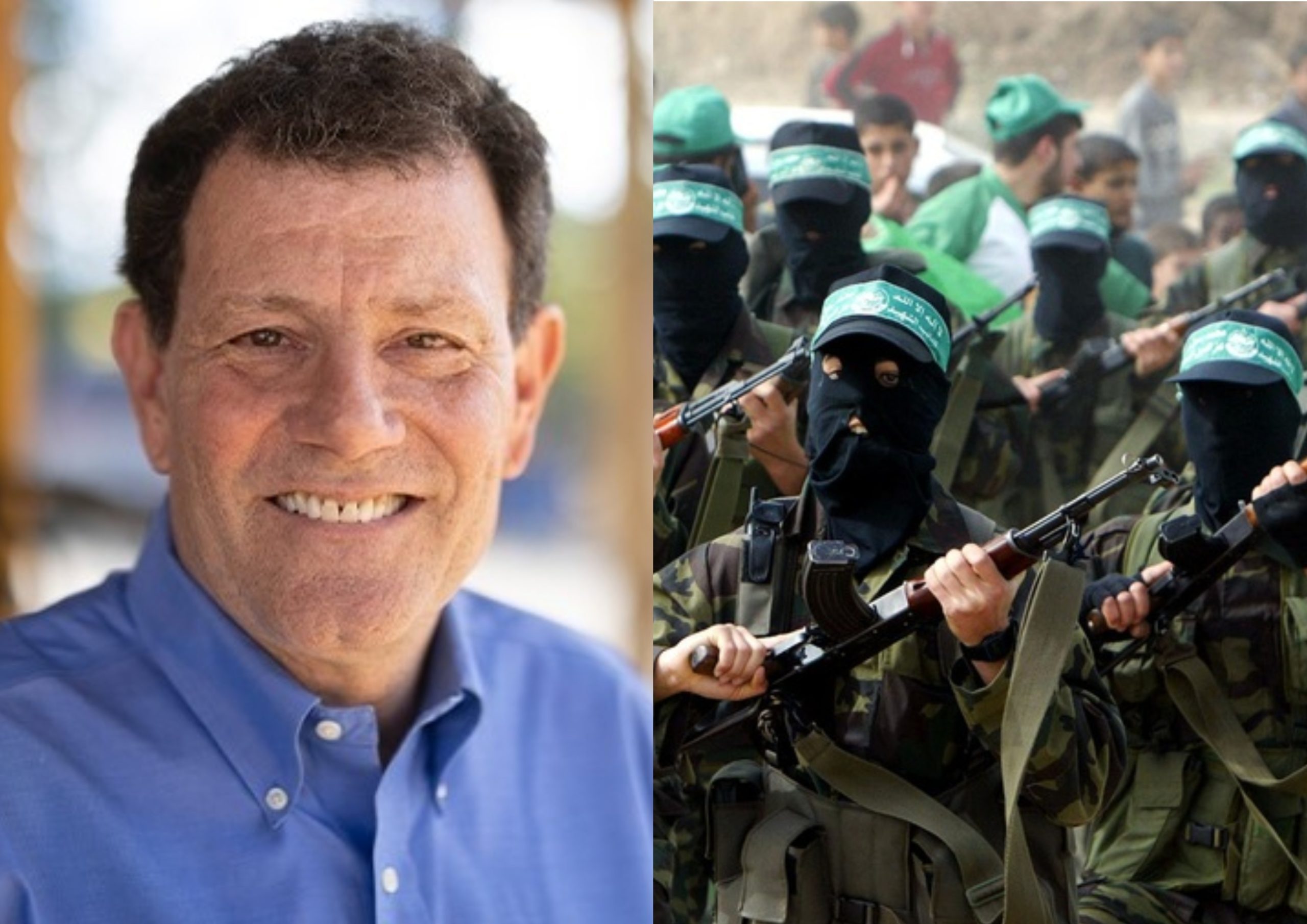
Nicholas Kristof, the New York Times's famously credulous columnist, may finally be facing his Waterloo after he published a 3,500-word column on Monday making lurid and bizarre allegations of "widespread Israeli sexual violence against men, women and even children."
The exposé—which readers began picking apart within moments of publication—recalls other Kristof follies over the last 25 years, including botched reporting on the 2001 anthrax attacks and child sex trafficking (which have led to Kristof apologizing and correcting himself). Through thick and thin, as many other columnists cycled in and out of the Times—even after an abortive attempt to run for governor of Oregon while living primarily in New York City—Kristof has persisted.
Experts and analysts say that Kristof's new opus—which accuses the Israelis of violating Palestinian detainees with carrots and having a trained dog somehow rape men—makes little effort to verify claims that relied heavily on a Hamas-tied advocacy group and a former Palestinian prisoner who has publicly celebrated terrorism against Israel and has shifted his story multiple times.
Kristof—who famously penned a lengthy mea culpa in 2014 after his articles about a Cambodian activist who was trafficked in brothels as a child turned out to be fictitious—has a history of embracing dubious narratives from his perch at the Times's opinion pages, which are edited separately from the news pages, though most readers will not realize the distinction. The two-time Pulitzer-winning author's Monday column claimed that Israel has "built a security apparatus where sexual violence" is encouraged, and contains the kind of sensational details that are hallmarks of Kristof's much-contested reporting on sex trafficking and other sex crimes over the years.
The column—and subsequent fallout from those challenging Kristof's narrative as a "blood libel" against Jews—will likely raise new questions about the credibility of the Times's reporting on Israel, and the generally anti-Israel stance of its opinion desk. It comes in the wake of a similar controversy over the Times's Pulitzer Prize-winning photographer, Saher Alghorra, who the Free Beacon first reported has referred to uniformed Hamas fighters and other anti-Israel militants as "martyrs" and "resistance" forces and who has been accused of taking misleading photos under the supervision of Hamas.
The timing of Kristof's piece is also raising eyebrows. It was published the evening before Israel publicly released a 300-page report detailing Hamas's "systematic sexual atrocities on Oct. 7 and against hostages thereafter." Israel's foreign ministry on Tuesday accused the Times of deliberately publishing Kristof's column on Monday evening to "undermine" its own findings about Hamas-led sexual crimes. The foreign ministry noted that it approached the Times "months ago" about a story on Hamas's use of rape, but that the publication "said it was not interested."
A December 2023 Times news story describing how Hamas soldiers raped and murdered multiple women on Oct. 7 led to an internal revolt by the far left, anti-Israel faction within the Times that leaked negative information to the Intercept and sought to undermine the paper's own reporters' story from within. Kristof's new column, from a different Times department, reads like a rebuttal, two and a half years later, to the newsroom's original reporting on Hamas's atrocities.
Kristof's column initially focuses on Sami al-Sai, whom the author describes as a "freelance journalist." Al-Sai recounted how he was raped by Israeli prison guards who shouted, "Give me the carrots." Al-Sai, Kristof failed to note, has tweeted praise for jihadi militant groups and celebrated Hamas's Oct. 7 terror spree, a fact first reported by the media watchdog group Honest Reporting. The organization also cited inconsistencies in Al-Sai's story between 2025, when he first reported it, and the subsequent retelling in Kristof's article.
After recounting Al-Sai's tale, Kristof opines: "Our American tax dollars subsidize the Israeli security establishment, so this is sexual violence in which the United States is complicit."
Kristof also cites uncritically information from the organization Euro-Med Human Rights Monitor, which he describes as "a Geneva-based advocacy group often critical of Israel." Kristof notes that Euro-Med recently determined Israel engages in "systematic sexual violence" that is "widely practiced as part of an organized state policy."
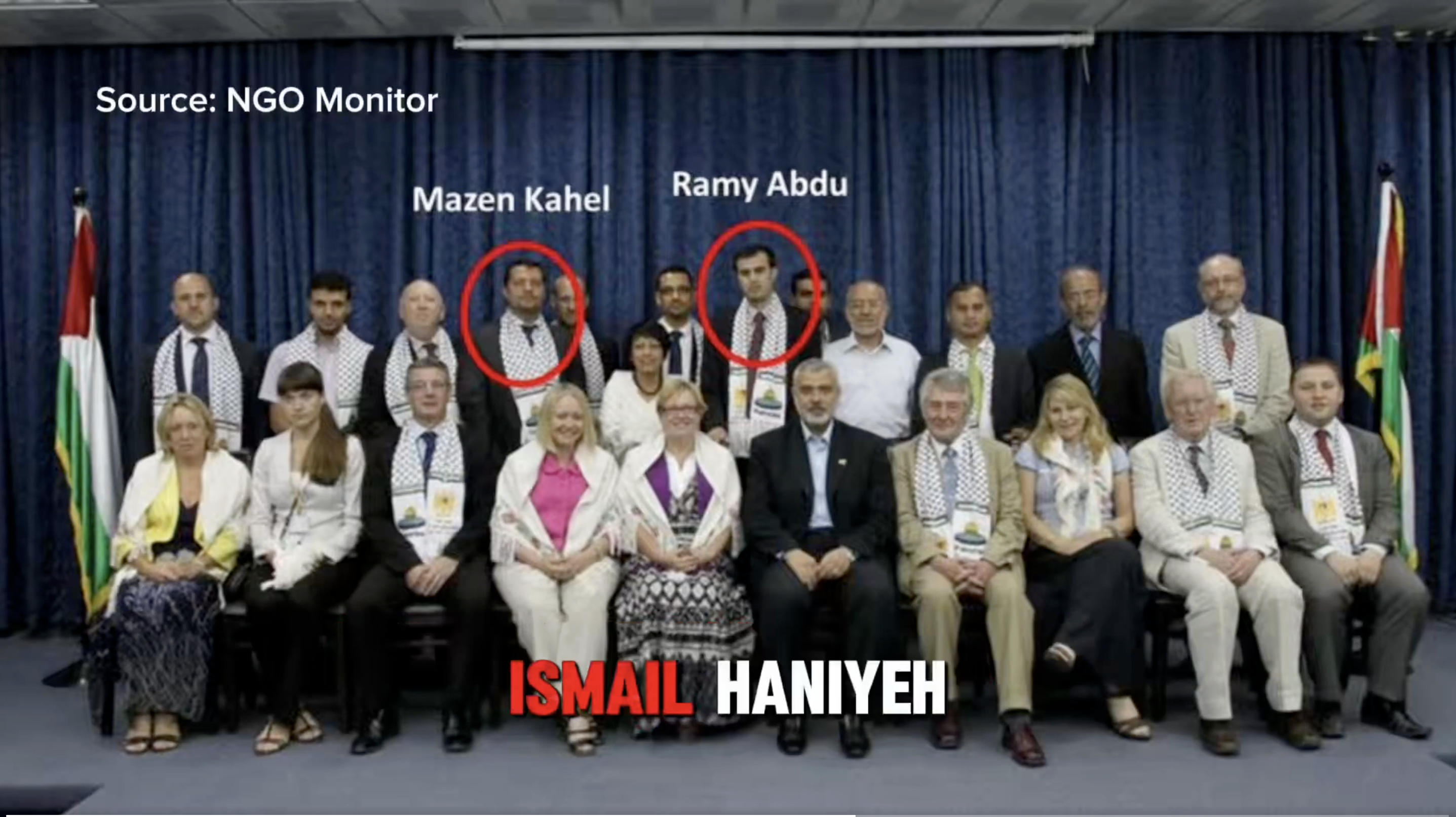
He does not note that Euro-Med has long made discredited claims that Israel "trains dogs to rape prisoners," or that its founder, Ramy Abdu, "has documented ties to senior Hamas leaders," according to the Israeli government and watchdog group NGO Monitor.
"This isn't journalism," the Israeli foreign ministry posted to X on Tuesday. "It's Hamas propaganda, a distortion of the truth and the facts all serving an anti-Israel agenda." Israeli ambassador to the United States Michael Leiter, meanwhile, published a 2011 photo showing Abdu and former Euro-Med chair Mazen Kahel posing alongside the late Hamas leader Ismail Haniyeh.
Honest Reporting reached a similar conclusion, saying that Kristof's column relies on "key sources whose public social‑media histories show open support for terrorist groups" and "stories that grow steadily more lurid over time, with dramatic new details added years later."
"This is not how you build a case for crimes as serious as systematic rape," the watchdog group wrote.
The Times disputed a report from the former MSNBC host David Shuster, who said on X that the publication was discussing a retraction of Kristof's column over concerns about its sourcing. "He travelled to the region to report firsthand on the stories of Palestinians who suffered abuse, and his article collects accounts in the victims' own words, backed by independent studies," a Times spokesman wrote on X. The outlet did not address Kristof's reliance on a Hamas-linked NGO and did not respond to a Free Beacon request for comment seeking information on how the column was fact-checked.
Kristof's reporting has faced similar challenges in the past, leading him to acknowledge errors and faulty sourcing. His 2014 apology letter, "When Sources May Have Lied," details how he was misled by Cambodian activist Somaly Mam, whose stories about human trafficking turned out to be fiction. He also turned heads in 2013 when he retweeted a missive likening AIPAC, the pro-Israel lobbying group, to pigs.
His many investigations over the years of Backpage.com, which he accuses of being a hub for sex trafficking of minors, have been denounced by advocates for sex workers, who say he inaccurately maligns a crucial marketplace for the world's oldest profession.
In 2001, Kristof penned a series of columns calling on federal prosecutors to pin an anthrax attack on a subject known as "Mr. Z," who later turned out to be Steven Hatfill, a former Army scientist who spent years being persecuted by media accounts claiming he was the culprit. Federal investigators never charged Hatfill in the attack, and he was ultimately exonerated, settling a lawsuit with the government for almost $6 million. Hatfill sued the Times and Kristof for defamation. The case was dismissed after Hatfill failed to prove that Kristof acted with "malice," but Kristof apologized to him in 2008.
The post ‘It’s Hamas Propaganda’: New York Times Writer Nicholas Kristof’s ‘Sexual Violence’ Column Caps a Career of Corrections, Retractions, and Apologies Going Back 25 Years appeared first on .