Human to Human Hantavirus Transmission Suspected on Cruise but Risk to Public Low, WHO Says
 QWER
QWER
The World Health Organization said on Tuesday that it suspects some rare human to human transmission of the deadly hantavirus took place between very close contacts on board a luxury cruise ship hit by seven confirmed or suspected cases.
Human to human transmission is not common, and the U.N. health agency reiterated that the risk to the wider public was low from a disease typically spread from contact with infected rodents.
A Dutch couple and a German national have died, while a British national was evacuated from the ship and is in intensive care in South Africa, officials said.

Two crew members require urgent medical care, the Dutch-flagged MV Hondius ship’s operator, Oceanwide Expeditions, said. Another person on board with a suspected case has only reported a mild fever.
Dutch Preparing Medical Evacuations
The Dutch foreign ministry said it was preparing the medical evacuation of three people to the Netherlands. It was not yet clear when or where the nearly 150 other people still onboard would disembark.
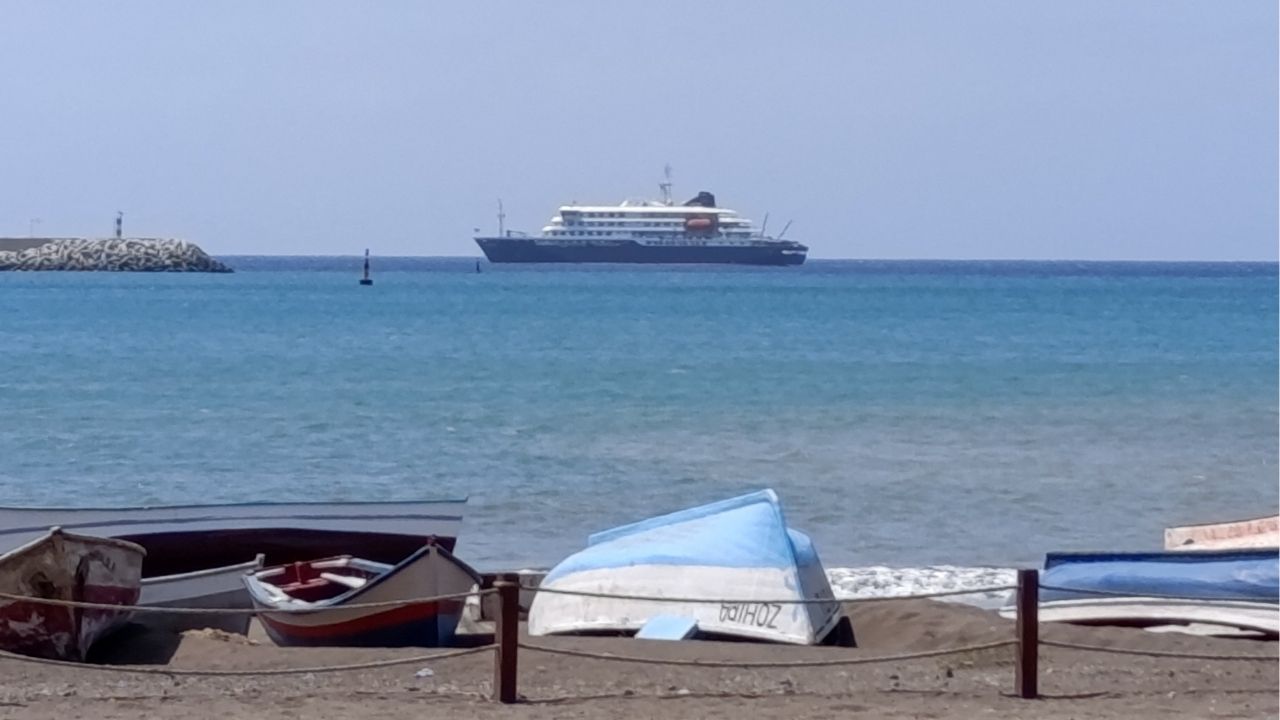
The cruise ship hit by the deadly outbreak is moored off Cape Verde. The island nation in the Atlantic off West Africa was meant to be its final destination but it has not allowed the vessel to put passengers ashore because of the outbreak.
People are usually infected by hantavirus through contact with infected rodents or their urine, their droppings or their saliva.
However, a limited spread among close contacts has been observed in some previous outbreaks with the Andes strain, which spreads in South America, including Argentina, and which the WHO believes could be involved in this instance. Testing is under way. The Hondius left Ushuaia in southern Argentina in March.
The WHO said it had been told there were no rats on board.
“We do believe that there may be some human to human transmission that’s happening among the really close contacts, the husband and wife, people who have shared cabins,” Maria Van Kerkhove, the director of epidemic and pandemic preparedness and prevention at the WHO, told reporters in Geneva.
‘We Know That You Are Scared,’ WHO Says
Van Kerkhove said the focus was now to evacuate the two sick passengers still onboard and then for the ship to continue to the Canary Islands.
“We have heard from quite a few people on the boat,” Van Kerkhove said earlier. “We just want you to know we are working with the ship’s operators. We are working with the countries where you are from. We hear you, we know that you are scared,” she said, adding they were working hard to get people home safely.
But later in the day, Spain’s health ministry said it saw no need for the ship to make a stop in the Canary Islands if everyone who was sick was evacuated in Cape Verde, unless new cases emerged.
The U.N. health body said its working assumption was that in the initial cases of the Dutch couple, who joined the ship in Argentina after travelling in the country, they were infected before joining the cruise.
Other cases may also have been infected whilst on bird-watching trips to islands where birds and rodents live as part of the cruise, it said.
Voyage Started in Southern Argentina
The Hondius is carrying mostly British, American and Spanish passengers on a luxury cruise that set off from the southern tip of Argentina in late March. The cruise visited the Antarctic peninsula and South Georgia and Tristan da Cunha – some of the remotest islands on the planet.
The voyage was marketed as an Antarctic nature expedition, with berth prices ranging from 14,000 to 22,000 euros ($16,000 to $25,000).
The first stricken passenger, the Dutch man, died on April 11. His body remained on board until April 24, when it “was disembarked on St Helena, with his wife accompanying the repatriation”, Oceanwide Expeditions said.
His wife, who had gastrointestinal symptoms when she was disembarked, later deteriorated during a flight to Johannesburg. She died upon arrival at the emergency department on April 26, the WHO said, adding that contact tracing was under way for passengers on that flight.
South African authorities have confirmed that the British patient, who is being treated in a Johannesburg hospital, tested positive for the hantavirus. The Netherlands has confirmed the virus in the Dutch woman who died.
South Africa’s National Institute for Communicable Diseases is working to sequence the virus, with results possible by Wednesday, Van Kerkhove said.
Argentina continues to have the most cases in the Americas region, the WHO said in December, with a lethality rate of around 32%, higher than average and than for other strains of the virus.
(Writing by Ingrid Melander; Additional reporting by Emma Pinedo, Chandni Shah, David Latona, Leila Miller, Makini Brice, Toby Sterling, Julio Rodrigues, Monica Naime; Editing by Nia Williams, Andrew Heavens and Alison Williams)
The post Human to Human Hantavirus Transmission Suspected on Cruise but Risk to Public Low, WHO Says appeared first on GV Wire.