Fresno Sin Money: Cannabis Market Cap, Blackjack Ban Injunction Hopes
 QWER
QWER
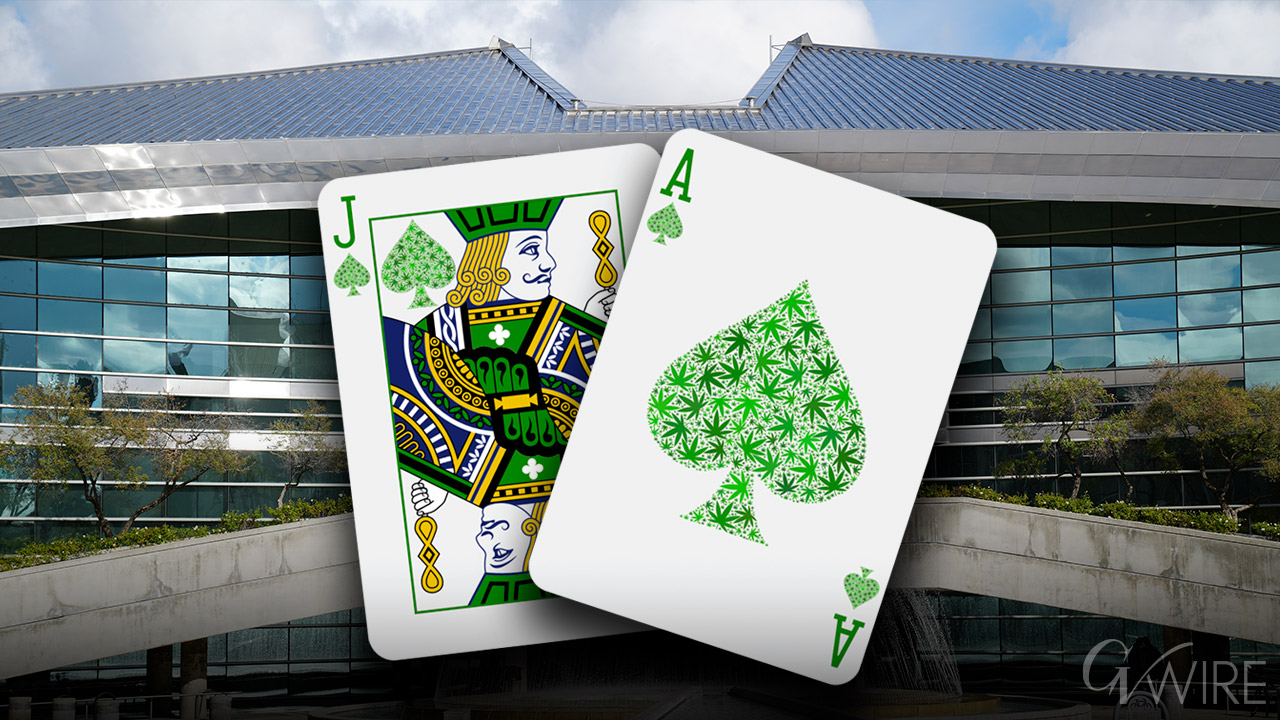
In a tight budget year, Fresno officials look anywhere they can to keep services funded, and in some cases, that means turning to sin.
With Attorney General Rob Bonta’s decision to ban blackjack, California’s gaming rooms have few cards left to play. One is their lawsuit against the attorney general.
Fresno Mayor Jerry Dyer told councilmembers Thursday he anticipated an upcoming loss of $400,000 in the city budget because of the blackjack ban.

Considering how much blackjack alone attracts players to card rooms, Club One Casino president Kyle Kirkland said that amount could be even more if a judge denies card rooms’ request to block Bonta’s order until the court case is resolved.
“I think $400,000 is a reasonable estimate, but at the outside it could be considerably worse than that if guests react as negatively as we think they’re going to react and we can’t find reasonable alternatives,” Kirkland said. “We could see, conceivably, all of our gaming revenue going away.”
Kirkland said Club One brings in about $1 million in tax revenue each year.
The effect could be worse for smaller communities such as Commerce, Bell Gardens, Hawaiian Gardens, and Gardena, he said.
Blackjack to End By September Without Injunction
On May 21, a judge will consider a request from the California Gaming Association for a preliminary injunction to keep the game that makes up roughly 50% of revenues for most card rooms, according to an assessment by Bonta’s office.
At Club One, the table games make up between 55% and 60% of revenue, with blackjack the bulk of that, Kirkland said.
Without the injunction, card rooms would have to stop playing the blackjack players are familiar with by the end of September. A separate order affects other player-dealer games.
Breaking with attorney general rulings of the past, Bonta banned blackjack by likening it to 21 — a game outlawed in 1860.
Kirkland said card rooms can modify the game, but it would be in a way players wouldn’t recognize.
“I’ve been in the gaming business for a couple of decades, and when I look at ways to modify these games, you can’t do it and still make it economically viable and something that the guests will embrace,” Kirkland said.
Judge Granting Card Rooms Small Courtroom Victories
Ahead of the May 21 hearing, San Francisco Superior Court has dealt card rooms some wins. The court on May 1 allowed cities to file amicus briefs alongside the gaming association’s lawsuit.
The Mayor of Gardena, Tasha Cerda, who is also chair of the California Cities Gaming Authority, said the rules impact city revenues.
Cardrooms in that city generate about $9.3 million annually.
“These regulations don’t just change the rules, they threaten to dismantle an entire industry and cause real, irreparable harm these regulations will have on our cities,” Cerda said.
A judge also blocked Indian casinos from intervening in the lawsuit between the cardrooms and the attorney general. Under the governance of tribal-state gaming compacts, different from those with cardrooms, the judge determined that the suit doesn’t affect the casinos — which pushed for the attorney general’s action, Kirkland said.
“Tribal casinos tried to intervene and become part of the lawsuit,” Kirkland said. “The judge said correctly ‘you’re a beneficiary of this.’ ”
A request for comment made to the California Nations Indian Gaming Association was not returned by the time of publication.
Is Fresno’s Weed Market’s ‘Pie’ as Big as It’ll Get?
Dyer’s team forecasted $3.3 million from the city’s taxes on cannabis dispensaries. In 2018, when councilmembers at that time considered legalization in the city, staff estimated up to $10 million a year added to city coffers by 14 dispensaries.
Now, with 16 weed shops in the city, Dyer said its likely the city has reached its full market potential.
“We’re not seeing revenues come in from the cannabis dispensaries to the degree we thought,” Dyer told councilmembers Thursday during his budget presentation.
Though the city has authorized up to 20 dispensaries — three per district save one district limited to two — applications for new shops have slowed dramatically, Dyer told the council.
“I don’t know that there’s a lot of people standing in line anymore to get involved in the cannabis dispensary business simply because of the process and the lack of revenue that they’re generating,” Dyer said. “The question is, are you sharing one big piece of the pie?”
Dyer said his office is working to fill the final four openings.
City’s Biggest Cannabis Bust
Black market sales still confound legal sellers who have to compete while being beset by a level of taxation cities and the state seemed to have thought limitless.
Fresno City Councilmember Mike Karbassi said the city had its biggest illegal cannabis bust last week.
He, councilmember Nelson Esparza, and City Attorney Andrew Janz’s code enforcement team raided an auto shop near Clinton Avenue and Highway 99 that had 9,000 marijuana plants in the back.
The California Department of Cannabis Control also participated in the raid, he said.
He said stopping illegal grows helps keep unsafe marijuana off the streets.
“We have a responsibility to go after these illegal growers,” Karbassi said.
Lauren Carpenter, CEO of Embarc dispensary said the black market cuts into the ability of legal businesses to thrive.
“Part of protecting those benefits is recognizing the impact of unlicensed activity and taking meaningful action to move folks into the legal market,” Carpenter said. “We’re grateful the city is doing just that.”
The post Fresno Sin Money: Cannabis Market Cap, Blackjack Ban Injunction Hopes appeared first on GV Wire.