

Explainer — A Key Surveillance Law Is Expiring. What Does That Mean for U.S. Intelligence?


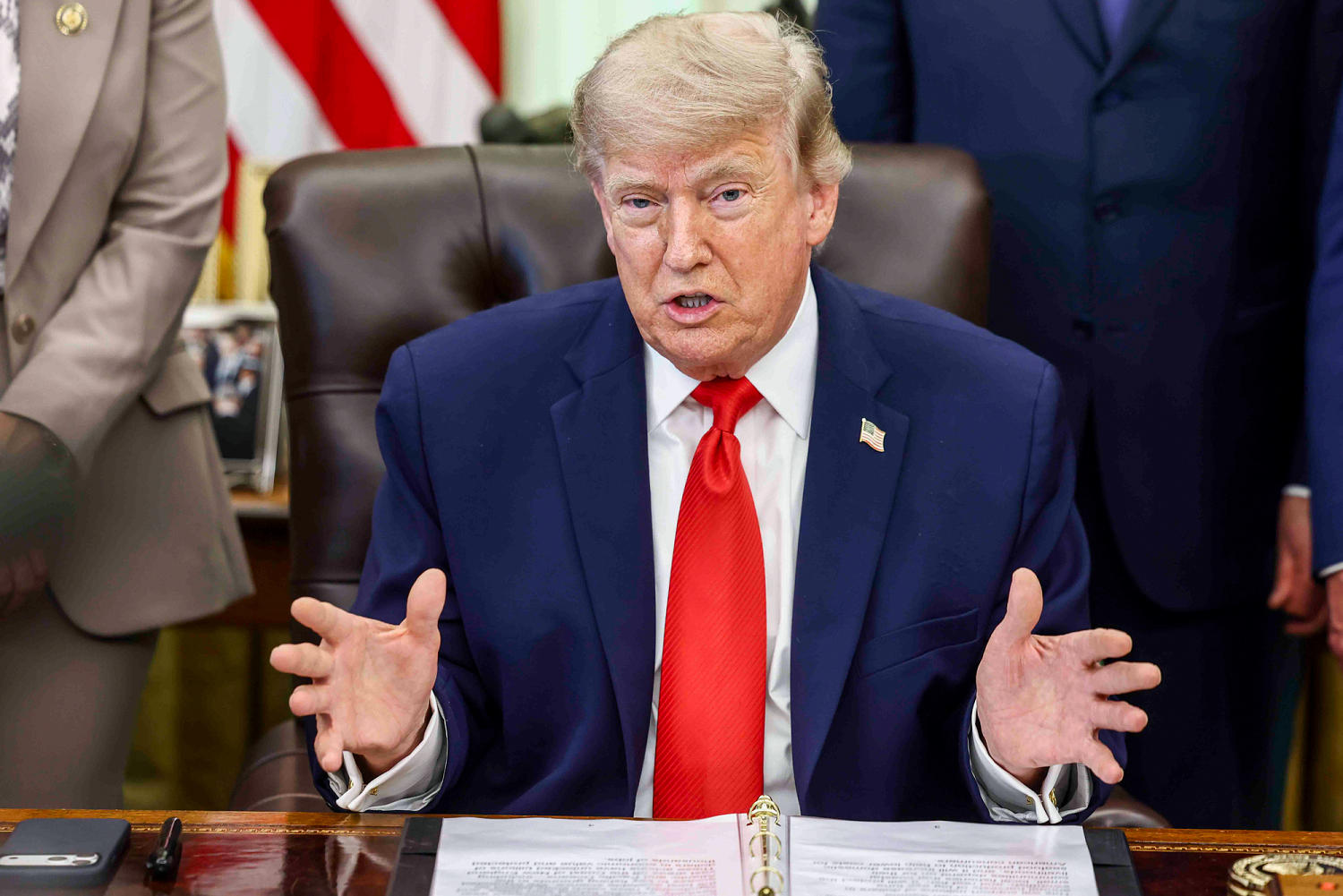
A key U.S. foreign surveillance law is set to expire at midnight on Friday amid a political fight over President Donald Trump’s choice for an interim chief of U.S. intelligence.
Section 702 of the Foreign Intelligence Surveillance Act (FISA) is a key tool for collecting foreign intelligence, officials say. It allows authorities to gather communications from foreign targets overseas and then search that data, including for information about Americans who may have been in contact with them, a central concern for critics.
Friday’s deadline is the second for renewing the law this year. Here’s how we got here:
What is Section 702?
Section 702 is “a key provision” of the FISA Amendments Act of 2008 that “permits the government to conduct targeted surveillance of foreign persons located outside the United States, with the compelled assistance of communication providers,” the Office of the Director of National Intelligence said in an explainer document.
The law allows targeting of non-U.S. citizens abroad, but bars U.S. agencies from targeting U.S. citizens. It also prohibits collecting data on anyone located in the U.S., or targeting a foreigner to get to a U.S. citizen.
But the communications of Americans get scooped up when they communicate with a foreigner who is under surveillance. The FBI, NSA, CIA and the National Counterterrorism Center “routinely” search the data for Americans’ phone calls, emails and text messages without having to obtain a warrant, the Brennan Center for Justice said in March 2026.
Why is it Expiring?
Section 702 expired on April 20, 2026, but Congress passed a 10-day extension. Bipartisan critics pushed for a warrant requirement to better protect Americans’ data, while the White House and intelligence officials sought a “clean” renewal with no changes to the law.
On April 30, Congress extended it again, this time for 45 days. As part of that agreement, Senator Ron Wyden, a Democrat who has long opposed warrantless data collection, secured an agreement to publicly release a secret FISA court ruling related to how Section 702 has been used.
Efforts to extend it further stalled when Senate Democrats balked at providing the needed votes after Trump refused to reconsider his decision to appoint mortgage regulator Bill Pulte as acting director of national intelligence. Pulte is a Trump ally with no national security experience.
What Happens Now?
Even if the law expires, federal authorities may still be able to query Americans’ data under Section 702, according to the Brennan Center for Justice’s Hannah James and Elizabeth Goitein, because the program operates under yearlong certifications last renewed in March.
There would be limits, however.
The legal protections Section 702 gives telecom and technology firms for providing Americans’ data to the government would apply only to operations already authorized. They may not cover new requests, and some firms could decline to cooperate, according to Mark Warner, the top Democrat on the Senate intelligence committee.
A T-Mobile representative said the company’s teams “carefully review each request and provide legally required information. Our teams are closely monitoring developments, and our focus remains on complying with the law and protecting our customers’ information.”
Neither AT&T nor Verizon responded to requests for comment.
Even without Section 702, U.S. authorities have other surveillance tools but they are less sweeping and generally require court orders.
The Department of Homeland Security uses facial recognition, social media monitoring, phone hacking tools and cell site simulators, which allow for granular surveillance of mobile phones in some cases, and the deployment of MQ-9 Predator drones.
Local police departments also employ facial recognition technology under various laws, news outlet Stateline reported last year.
FISA allows the U.S. attorney general to authorize a surveillance operation on an emergency basis, but the government must obtain court authorization after 72 hours or terminate it.
(Reporting by AJ Vicens in Detroit; Editing by Sanjeev Miglani and Don Durfee)
The post Explainer — A Key Surveillance Law Is Expiring. What Does That Mean for U.S. Intelligence? appeared first on GV Wire.
 Like
0
Like
0
 Dislike
0
Dislike
0
 Love
0
Love
0
 Funny
0
Funny
0
 Wow
0
Wow
0
 Sad
0
Sad
0
 Angry
0
Angry
0







Comments (0)