Did Epstein Actually Write That Suicide Note? Here’s How We Tried to Find Out.
 QWER
QWER
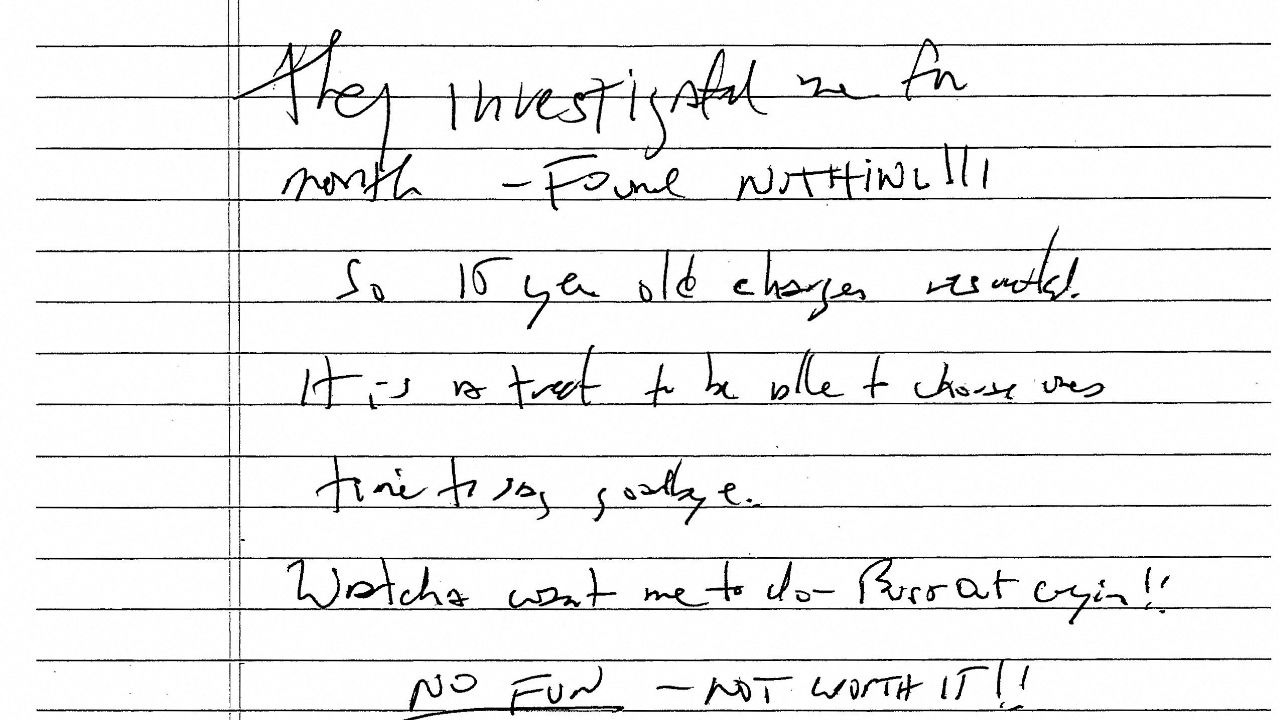
A judge recently unsealed a suicide note that Jeffrey Epstein may have written from a jail cell in the last weeks of his life. “It is a treat to be able to choose one’s time to say goodbye,” the note read in a messy scrawl.
The document had been locked in a New York courthouse for years, caught up in the criminal case of Epstein’s cellmate, who said he had found it.
Last month, The New York Times reported on the note, and our legal team petitioned the judge for the document’s release. At a time when Congress has demanded transparency around the Epstein sex-trafficking scandal, our lawyers noted, “the public interest in the note’s disclosure is immense.”

Millions of our readers have now seen the note. And many still want to know: Did Epstein really write it? Will we ever know?
It’s a surprisingly complicated question. I asked reporters Benjamin Weiser, Steve Eder and Jan Ransom to walk through how we’ve been trying to authenticate the note. Here’s our edited exchange.
Q: Last year, Epstein’s former cellmate, Nicholas Tartaglione, talked on a podcast about discovering a suicide note after Epstein was found unresponsive in his cell in July 2019, weeks before his death. Surprisingly, that revelation didn’t get much attention beyond the podcast. So what made you take a look at it?
BEN WEISER: The sequence of events here is a bit hard for us to talk about publicly because of some reporting that was off the record. But I’ve covered the New York federal courts for years and had followed the Tartaglione case. And we of course knew he had been Epstein’s cellmate.
STEVE EDER: And I’ve spent the last several months up to my ears in the millions of Epstein-related documents that had been released by the government. After a conversation with Ben about his reporting, I tried some new keyword searches, and one combination hit on this cryptic but intriguing document, labeled “Chronology,” which referred to “JE,” a note and a bunch of Tartaglione’s lawyers.
WEISER: I was also familiar with the docket in Tartaglione’s case and had seen that there had been a mysterious sealed proceeding involving his defense team. It was pretty intriguing, though we didn’t know how all the pieces fit together.
Q: So at this point, we had some reason to believe that Tartaglione had passed a real note of some kind to his lawyers. Jan, how did you get him to talk to us?
JAN RANSOM: As a reporter who has covered jails and prisons in New York, I have talked to dozens of inmates. I mailed a letter to Tartaglione, who is serving four life sentences in a California prison. (He maintains his innocence and has appealed his conviction.) We then began corresponding over email and the phone. Over a series of 15-minute conversations — the maximum time that inmates are allowed — Ben and I discussed the note with him.
Tartaglione described the moment he found the note, tucked inside of a graphic novel. For the many readers who have asked: No, Tartaglione did not recall the name of the novel.
He recounted much of what the note said, and as we discovered later, his memory was quite accurate.
Q: Our story discussions turned to whether this guy, who happens to have been convicted of a quadruple homicide, was telling us the truth.
EDER: We thought if we could see the actual note, then we could at least compare it to other writing samples we had that were believed to have been written by Epstein. But we couldn’t find the note in the files. And the Justice Department told us they had never seen it.
RANSOM: But we knew from the chronology document that Tartaglione’s lawyers had apparently authenticated the document, though it didn’t say how. It also said that he had handed the note to one of his lawyers, John Wieder.
Ben and I spoke with Wieder, who confirmed that he had received the note from Tartaglione during a meeting at the jail. Wieder said he alerted Tartaglione’s lead attorney, Bruce Barket, and then kept the note in a safe until a judge ordered that it be brought to the courthouse in White Plains, New York. From what we could tell, it had stayed there ever since.
Q: So then, with the help of Times lawyers, we petitioned the judge to release the note, which he did. What was your reaction when you saw it? What did you make of the handwriting?
EDER: I immediately noticed that one of the phrases on the note — “NO FUN” — repeated what was found on another note believed to be written by Epstein and left in his cell when he was found dead. While the science of handwriting analysis is limited, some examiners who reviewed both letters have noted similarities. And the script in the writing samples looks similar to me.
The suicide note also included another phrase — “Watcha want me to do — Bust out cryin!!” — that Epstein had used in emails to friends and family.
WEISER: One remaining question we had was how Tartaglione’s lawyers had authenticated the note all those years ago. After the note was unsealed, I asked Barket.
He said the defense team didn’t use forensic methods to authenticate the document. Instead, they took the same approach that we did, comparing it to the other “no fun” note found in Epstein’s cell after his death.
Barket said the process “satisfied the lawyers in my firm that the note was written by Jeffrey Epstein.”
___
If you are having thoughts of suicide, call or text 988 to reach the 988 Suicide and Crisis Lifeline or go to SpeakingOfSuicide.com/resources for a list of additional resources.
This article originally appeared in The New York Times.
By Virginia Hughes
c. 2026 The New York Times Company
The post Did Epstein Actually Write That Suicide Note? Here’s How We Tried to Find Out. appeared first on GV Wire.