Dangerous or Useful? Motorized Scooters Debate Takes Over California Colleges
 QWER
QWER
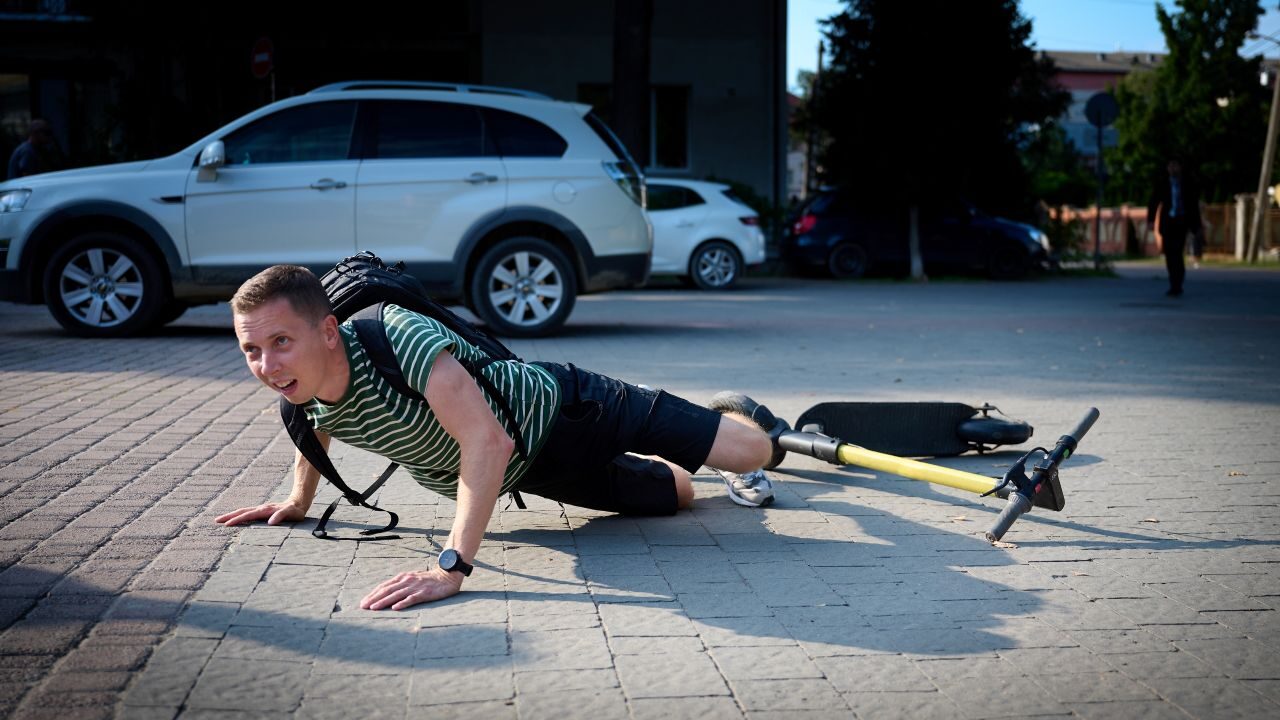
Universities across California are cracking down on motorized scooters on campus, sparking mixed reactions among students.
By California Student Journalism Corps
EdSource
UCLA students must now register their scooters with the university if they use them on campus or store them in student housing. Starting this fall, electric scooters, skateboards and any other e-vehicles will be banned on Fresno State’s campus.
EdSource reporters interviewed students at six California colleges and universities and found that students hold widely varying views on the presence of scooters on campus.

For some students who’ve been injured or faced close calls with scooters, the stricter rules can’t come soon enough. Other students, meanwhile, say such crackdowns are misguided and target an integral part of campus culture.
This story was originally published by EdSource. Sign up for their daily newsletter.
Ban on E-Scooters at Fresno State
Selene Garcia, a third-year business administration student at Fresno State, “wanted to join the fun” after seeing many students use e-scooters to navigate the commuter campus. Though she never injured anyone while riding her scooter, she acknowledged aggressive behavior by some riders prompted the university’s ban.
“I can’t control the ones that don’t follow the rules and are reckless, but if [a ban] is going to control accidents, then it needs to happen,” Garcia said. “I am sad I won’t be able to use my electric scooter, but we have to respect the university.”
Matt Hawkins, Fresno State’s vice president of administration and chief financial officer, said in an April 24 email that students who use e-vehicles on campus will be in violation of the university’s student code of conduct. Any vehicle left unattended will be considered abandoned and may be impounded and transferred to the lost and found, he said.
Fresno State, which first allowed electric scooters in 2018 and installed scooter parking in 2022, said the policy will apply to all students, employees and visitors, but devices used for people with mobility disabilities and state vehicles will be exempt.
Hawkins said Fresno State analyzed campus safety data, incident reports and actions taken by other California colleges and universities in making its decision.
In an emailed statement to EdSource, a university spokesperson said students will not have to pay a fee to retrieve their motorized vehicle from the lost and found, but repeated offenders could face punishment.
“While citations will not be issued to individuals [for riding scooters], students who repeatedly violate the policy may be referred to student conduct,” the Fresno State spokesperson said.
Marina Soares, a third-year broadcast journalism student, said that she originally did not mind other students riding around on e-vehicles, but changed her mind after getting hit by a student who was going too fast on an e-scooter in a no-wheels zone on campus.
“Too many riders use the excuse of students not paying attention [as] to why they’re getting hit, but we never blame pedestrians for getting hit by a car,” Soares said. “Why is it not the same for those riding a scooter?”
Rise in Citations at UCLA
At UCLA, campus police ramped up stops and citations over the last year, issuing more than 100 citations to students for speeding or riding e-scooters unsafely from September through November, according to the Daily Bruin.
Macey Matias, a second-year psychobiology student at UCLA, was accelerating on a Bird electric scooter — a rental vehicle — at around 15 miles per hour on campus when she made a sharp turn and fell. Matias said that before the incident she had ridden a scooter once a week.
The next day, Matias sought urgent care at the Ronald Reagan UCLA Medical Center, and left the building with a sling on her left arm. Though Matias said she rode electric scooters for enjoyment, she said she stopped and deleted the Bird app after being injured.
She believes students who use scooters should prioritize personal safety, including wearing protective gear.
“People have scooters just to get from point A to point B faster,” she said. “But if it’s at the expense of your safety, then what’s the point?”
For Kayla Chung, a freshman on UCLA’s Division I women’s tennis team, her electric scooter has been an integral time-saving resource. Almost all of the UCLA athletes she knows use an e-scooter every day.
“Whether it’s going to classes, going to run errands in Westwood, or back and forth between the tennis courts and my dorm, it’s been a huge help,” said Chung, a first-year economics and psychology student.
If UCLA were to follow in Fresno State’s footsteps and ban e-scooters, Chung said it would be more difficult for her to manage her schedule since she would have to account for the slower pace of walking.
“I personally make an effort to ride cautiously at all times,” Chung said. “I trust myself to ride responsibly, and I hope that other riders approach scooter use with the same level of caution.”
A UCLA Transportation spokesperson said in an email that the university does not anticipate a ban on electric personal devices in the foreseeable future, adding that motorized vehicles are permitted if used safely.
“These devices are an important transportation option for many Bruins, particularly students traveling short distances across and around campus,” the spokesperson said.
Weighing Safety vs. Convenience
At UC Irvine, motorized scooters and bikes are banned on campus, and the university police department is responsible for enforcing the ban.
Kylie Jones, a second-year biology student, said some students flout the rules because enforcement is inconsistent. She recalled a recent close call with an e-scooter rider that left her fuming because the rider did not apologize.
“There is either a large majority of people who are not following the rules and being unsafe, or a loud minority who ruin it for anyone else and are constantly being unsafe,” Jones said.
Another UCI student, Mary Froberg, rides a mountain bike to school every day and is among the many students who rely on alternatives to driving, such as e-scooters, to get to campus.
Froberg said UCI’s campus infrastructure does not make it easy for students who ride electric and manual vehicles alike to maintain traffic safety on campus. She said that improvements to infrastructure — such as protected bike lanes — could eliminate the need for a ban, which she said would be a bad idea.
“E-scooters and e-bikes are a pretty ideal mode of transit for a lot of people,” she said. “They don’t emit greenhouse gases, assuming you charge them using clean energy.”
Eden Kirsch, a manual bicycle rider at Sacramento State, said they have not seen any signs on campus that clearly indicate the speed limits for scooters and bikes. Nor have they seen campus police enforce speeding rules.
Sacramento State prohibits the use of motorized bikes and scooters in pedestrian lanes, wearing earbuds while riding, riding with passengers and operating “in a manner determined to be reckless.”
Although Kirsch does not use an e-bike, they believe that banning them is unrealistic and the school could monitor safety more effectively in a different way, like adding radar speed signs around campus.
“Some people are commuting from further [away] or have mobility issues,” Kirsch said. “I feel like just enforcing safety would be the thing to do.”
At Cal State Dominguez Hills, administrators are reviewing the on-campus micromobility policy to usher in electric scooters and bikes, along with the addition of riding lanes around campus.
Lilly McKibbin, a university spokesperson, said in an email that officials decided to add bike lanes after 75% of campus community members responded positively to the idea in a fall 2024 transportation survey.
Moises Gomez, a fourth-year kinesiology student at CSUDH, is open to the idea of having electric scooters around campus. Gomez said he expects the number of scooters on campus to increase because of the new official policy.
“I don’t really have an issue with the e-scooters, unless I get hit by one, because sometimes I feel like without warning they will be within inches of you, just darting past you,” Gomez said. “I don’t really like when they’re on the walkway. It feels like an inconvenience to both of us, because they are trying to get to where they are going, and I’m just trying not to watch my back.”
About the Reporters
Natalia Mochernak is a second-year student at UCLA majoring in communication and Spanish; Amanda Velasco is a second-year public affairs student at UCLA; Mariam Farag is a third-year political science and literary journalism major at UC Irvine; Ethan Beck is a third-year transfer student at Fresno State majoring in mass communications and journalism; Sapphire Perez is a senior at CSU Dominguez Hills; Olivia Muñoz is a second-year student at Los Angeles Pierce College studying journalism and film; and Amelia Angeles is a fourth-year literary journalism major at UC Irvine. They are members of the EdSource California Student Journalism Corp.

The post Dangerous or Useful? Motorized Scooters Debate Takes Over California Colleges appeared first on GV Wire.