As Trump Heads to Beijing, China Is ‘Locked and Loaded’ for a Fight
 QWER
QWER
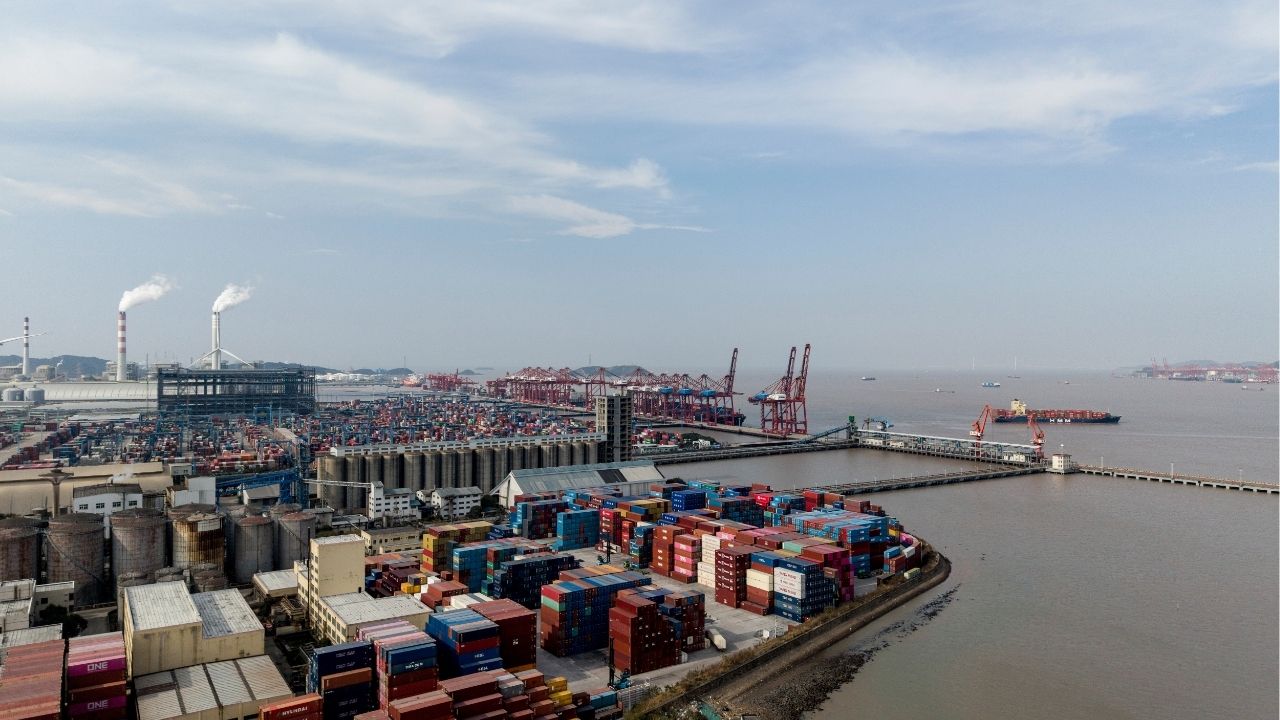
HONG KONG — Peace and stability will be the public message when President Donald Trump and China’s leader, Xi Jinping, meet in Beijing this week. But behind the diplomatic platitudes, both governments are quietly preparing for something harsher — a prolonged economic war, mapping vulnerabilities and sharpening tools to inflict pain on the other.
In recent weeks, China has made clear that it no longer fears another escalation. It reached for a new legal mechanism to counter U.S. sanctions. It blocked Meta’s acquisition of a promising artificial intelligence startup founded in China. And it codified rules aimed at punishing foreign businesses that comply with Western efforts to pull back from China.
The moves are part of Beijing’s broader campaign to push back against what it sees as Washington’s intensifying efforts to constrain its economy and technological rise. Over the past year, the two countries have ratcheted up their economic offensives, whacking each other with steep tariffs, restricting the flow of rare earths and critical technologies and imposing sanctions on major industrial companies.

Whether Xi and Trump can agree to place even modest guardrails on their expanding economic weapons will be a critical litmus test of whether their meeting succeeds.
“China is signaling more strongly that they are locked and loaded,” said Andrew Gilholm, a China expert at Control Risks, a consulting firm. “We are on the brink of a much more frequent or widespread use of Chinese countermeasures against U.S. sanctions.”
It is a high-stakes moment a decade in the making. In his first term, Trump warned that confrontation with China over technology and trade was unavoidable. He placed tariffs on certain Chinese sectors and singled out companies for sanctions. China responded with restrained, largely symbolic countermeasures, as regulators drafted laws mirroring U.S. actions, creating blacklists and export control lists.
But what started as a game of tit-for-tat has escalated, reaching across global supply chains and leaving countries and companies scrambling to manage the fallout. After years of mostly reacting, China is going after entities that comply with Washington’s sanctions.
The growing concern is that both countries will wield their expanding regulatory regimes as economic cudgels, dragging other nations and businesses into the fight. Business leaders and experts warn that the two superpowers are increasingly forcing the world to choose a side: China or the United States.
In April, Beijing announced sweeping rules giving regulators the power to investigate corporate records, interrogate employees and bar companies or executives from leaving China if they are found to be helping shift supply chains out of the country.
That puts companies manufacturing goods for Americans in a difficult position. Many have already moved factories to countries such as Vietnam or Mexico to avoid sky-high tariffs on Chinese-made products, while others have drawn up contingency plans to do so.
The rules also open a new corporate battlefront that Beijing previewed in 2024 after PVH, the owner of Calvin Klein and Tommy Hilfiger, stopped sourcing cotton from Xinjiang, the western Chinese region. The United States has imposed an import ban on cotton from Xinjiang because of its association with forced labor.
China accused PVH of discrimination, initiated an investigation and eventually placed the company on its “unreliable entity list,” a designation that can carry legal consequences, including restrictions on executives from leaving the country.
It no longer appears to be an isolated case of retaliation. “It is posing both a risk and a dilemma: ‘Will you break our law or American law?’” said Sean Stein, president of the U.S.-China Business Council.
The shift in China’s regulatory posture accelerated last year after a series of aggressive actions from Washington, including raising tariffs to 145%, imposing fees on Chinese ships at U.S. ports and restricting critical technologies such as semiconductors, chemicals and machinery.
“Now it has become a hot stove approach: ‘We need to show that when the U.S. takes an action, they will touch a hot stove and get burned,’” Stein said, summarizing the Chinese perspective.
This approach means putting new regulatory weapons into action, as Beijing did this month after Washington placed sanctions on five Chinese refineries over their ties to Iran. China ordered the companies to defy the sanctions, invoking a blocking measure it enacted in 2021 to shield companies from foreign laws it opposes.
The Chinese government has come to see Washington’s economic nationalism and trade protectionism as part of a longer trend that threatens China’s economy and national security.
To stave off a deep economic downturn set off by a real estate crisis, Beijing has propped up manufacturing through subsidies and tax benefits, leaving China with a huge and growing trade surplus with much of the world.
Sanctions and restrictions “will pose a serious danger to the safety of China’s supply chain, so China needs to deal with this challenge in a more systemic way, not only to identify and provide early warning to the possible threat, but also to cope with this threat when it has already occurred,” said Wu Xinbo, director of the Center for American Studies at Fudan University in Shanghai.
“China,” he added, “needs to establish a legal framework for dealing with these kinds of challenges in the long term.”
—
This article originally appeared in The New York Times.
By Alexandra Stevenson and Murphy Zhao
c. 2026 The New York Times Company
The post As Trump Heads to Beijing, China Is ‘Locked and Loaded’ for a Fight appeared first on GV Wire.